Winter break this year was, as always, spent traveling! This time, my family and I headed to Asia, where we embarked on a cruise through the South China Sea, visiting multiple countries along the way.
Last Christmas was split between Iceland and Portugal—experiencing both a nordic winter and some warm sunshine. This year we also wanted to go somewhere exciting and Asia was on our radar.
While researching in August, we came across a Norwegian Spirit Cruise itinerary that seemed perfect. Since it had been years since our last cruise, we figured it would be a fun and convenient way to explore multiple countries at once. A flight to Asia isn’t cheap, and the journey is long, so once you make the trip, it’s hard not to want to see as much as possible. Of course, visiting six countries in two weeks doesn’t allow for full immersion, but it gives you a great overview of where you’d love to return and dive deeper on a future trip. With that in mind, we booked the cruise and started planning everything else for the trip.
If you’re considering a cruise, always keep an eye out for deals! A package with unlimited drinks for a 14 day Norwegian cruise usually costs around $500 extra per person, but by booking with a promotion, it was included at no additional cost! Definitely something to watch for.
Now, for the trip. Our two-week journey included Taiwan, the Philippines, Malaysia, Brunei, and finally, Singapore. Boarding: Taiwan!
Day 1 of 14:
Flying out of Nürnberg with a layover in Istanbul, I finally arrived in Taipei, Taiwan, after about 15 hours of travel. No matter how many times I fly, I don’t think I’ll ever fully get used to it. On the bright side, airplane food has come a long way! Or maybe Turkish Airlines is just that good. I only recently started flying with them, and honestly, they make economy class feel way more comfortable than most airlines. They hand out menus for meal choices, provide a toiletry bag at each seat, and even their pillows and blankets are thicker and cozier—none of those flimsy ones you usually get. Definitely a step up!
This was my first time at the Istanbul Airport, and I was blown away—it’s massive and feels more like a luxury shopping mall than an airport. Also FYI, if you have a connecting flight here, it takes a long time to get to your next gate, so plan accordingly!
I landed in Taipei at 10 a.m., giving me a few hours before boarding my cruise at 1:30 p.m. Taipei, located in northern Taiwan, is the island’s capital and largest city. After ordering an Uber, I headed toward the city center, where my family was waiting. Our family is quite international, so reuniting is always very meaningful. With me in Germany, one sister in Spain, another soon to be in London, and the rest in the U.S., traveling has become one of the best ways for us to come together.
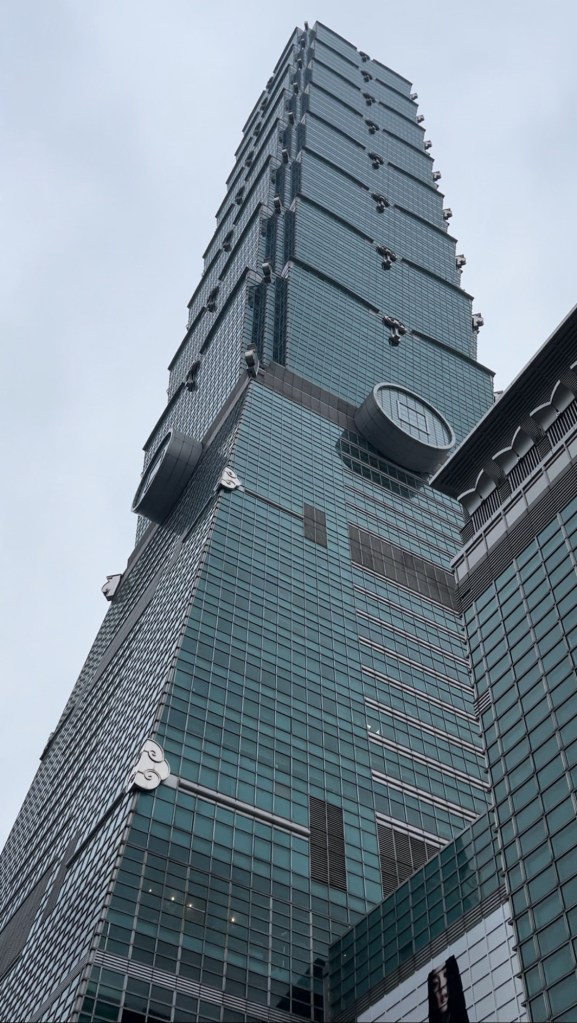
After reuniting, we started by making our way to the Taipei 101, which was for many years the tallest building in the world and is currently the 11th tallest. Designed to resemble bamboo, a symbol of resilience, the tower was completed in 2004. It features a massive tuned mass damper weighing 660 metric tons! This is a giant hanging ball that stabilizes the structure against strong winds and earthquakes. It was on display which was pretty neat to see, offering a fascinating display of inertia.
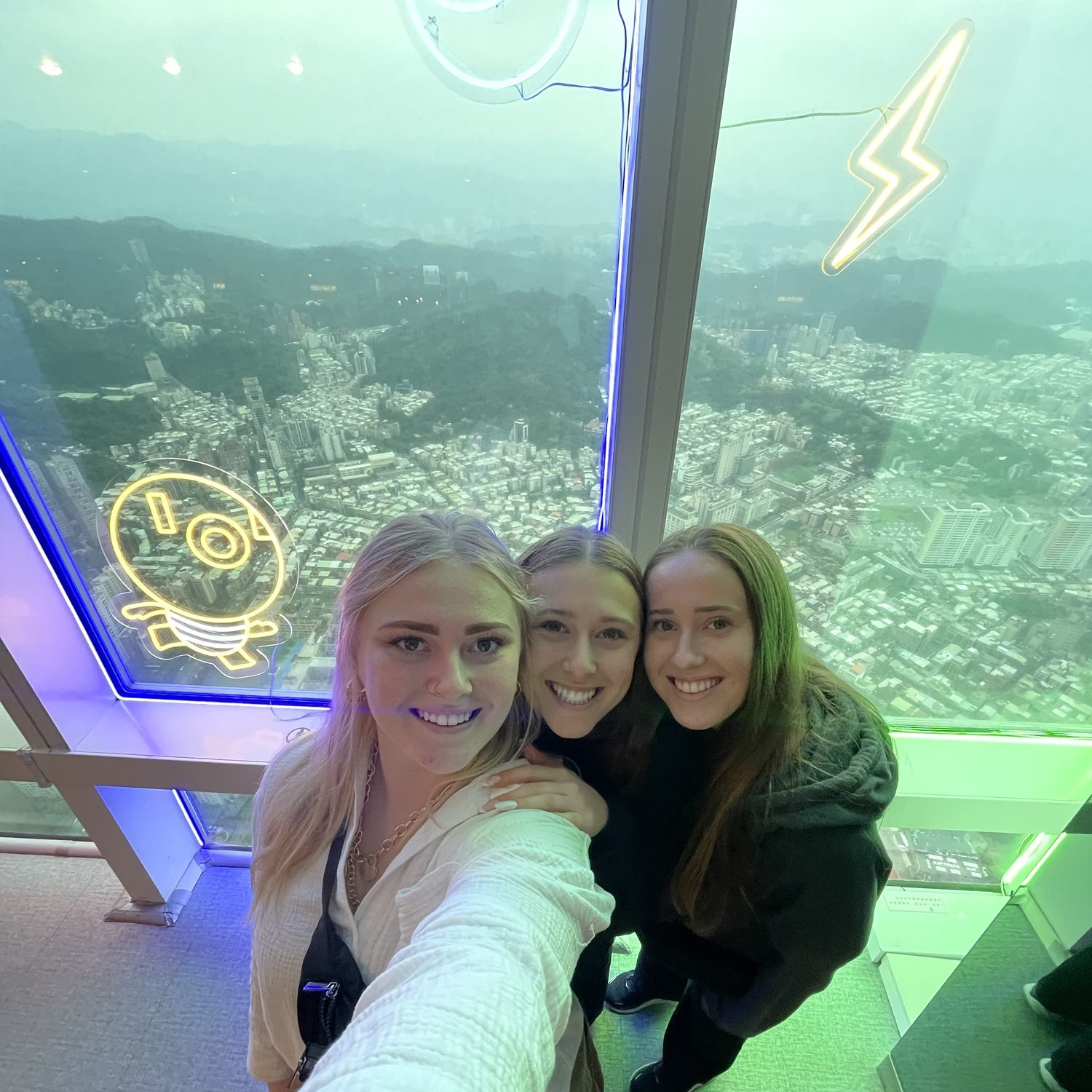
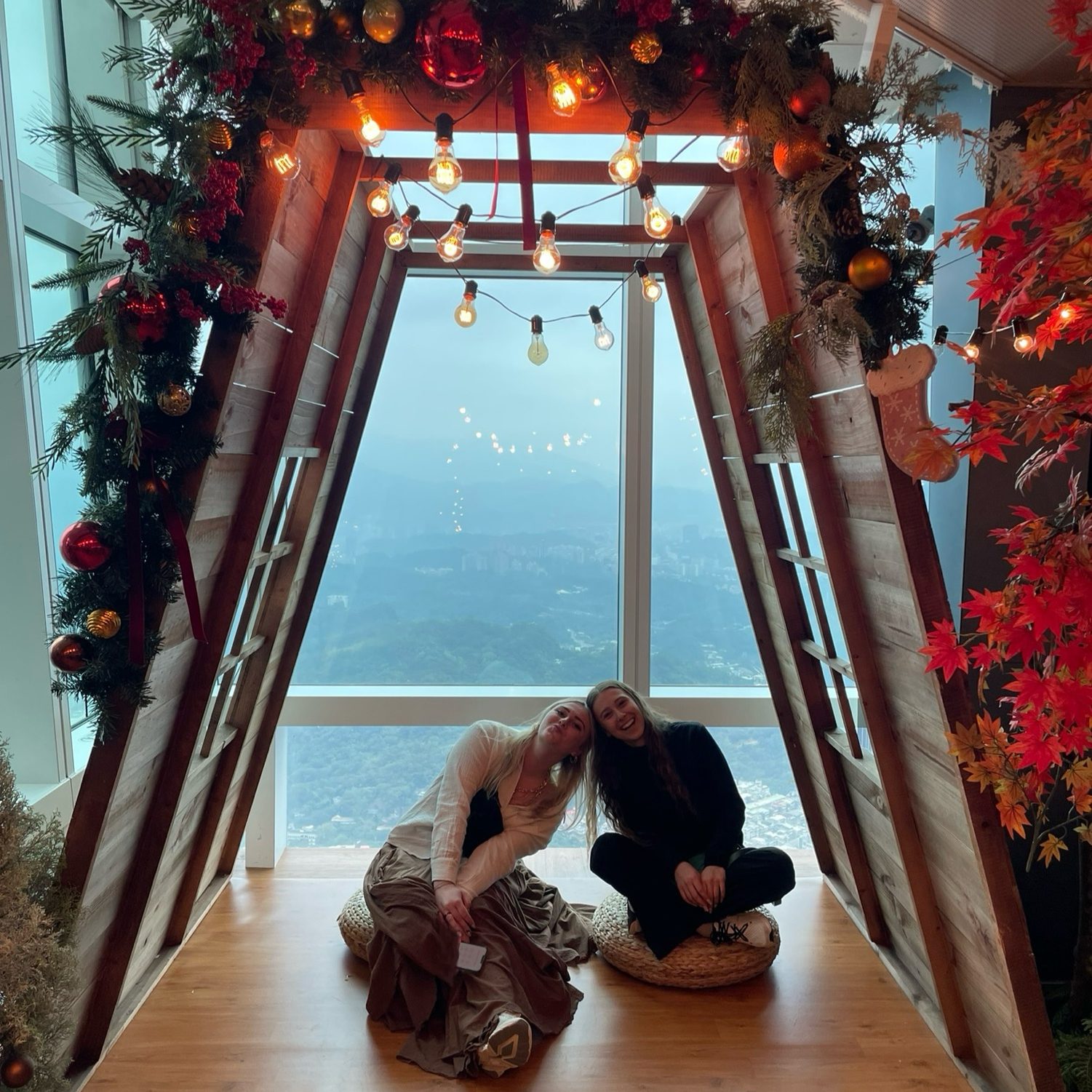
Along the windows, various themes for taking a selfie were featured, including a garden area, fireworks, and little animated figures. Asian countries are definitely known for their love of photography, and it’s clear that it is definitely apart of the culture! This tower was definitely worth going up, even if only to experience how insanely fast the elevator moves!
Shortly after our visit, it was already time to head back to the ship. With the baggage tag sent before arrival, you simply drop off your luggage, then head to a counter to pick up your key card—which serves as your ID, room key, and onboard payment method for the trip.
As soon as we boarded, we did what one does: explored every corner of the ship! We checked out the theater, gym, spa, lounges, restaurants, pools, casino, and even the sports area, which had a basketball/soccer court and a golf net. Cruises also always have an all-day buffet, separate from the specialty restaurants. And every cruise we’ve been on has had an ice cream station, which is probably my favorite part of cruising!
About an hour after boarding, the ship set off, officially marking the start of our journey. Exploring was fun, but after a long travel day, exhaustion hit us hard. So after a quick buffet dinner, we called it a night.
It’s amazing how much they manage to fit onto a cruise ship, especially considering that the Norwegian Spirit is about half the size of some we’ve been on before! As the smallest ship in NCL’s fleet, it holds around 2,000 passengers, whereas the Norwegian Encore and Bliss accommodate 3,500–4,000. This means that there are even more amenities on these larger ships and when you’re on board for 14 days, the size definitely makes a difference in how much there is to do. Personally, I prefer the larger ships for the extra entertainment and amenities!
Although you usually don’t feel any rocking since cruises are so large, it was more noticeable on this one, and the first night was rough. The fact that the Spirit is the smallest was the cause of feeling the motion more intensely. Luckily it wasn’t so noticeable every night.
Day 2 of 14:
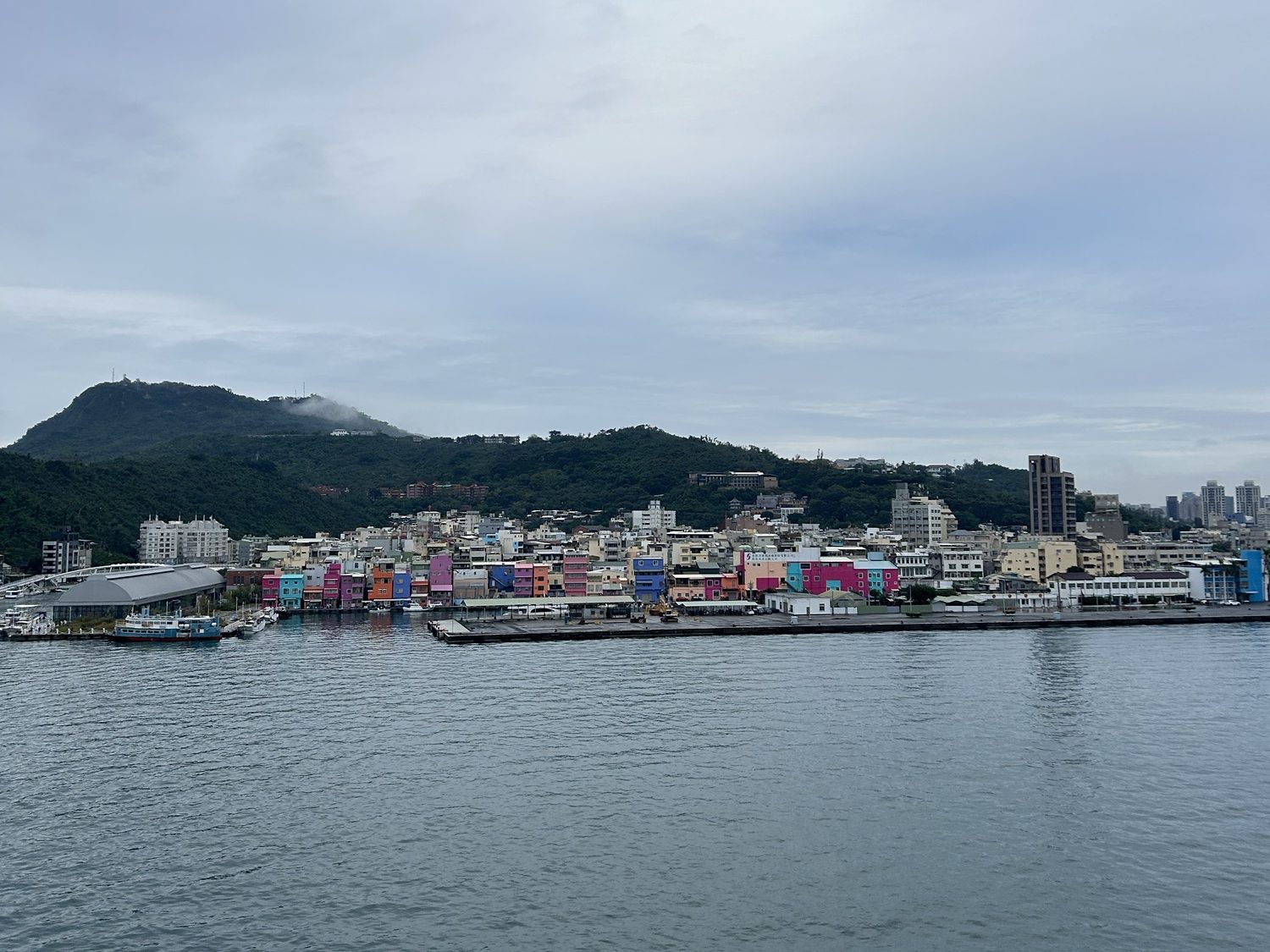
This morning, we woke up in Kaohsiung, Taiwan! This is a city in the south of the country, the complete other side to Taipei the day before. Thanks to lingering jet lag, we were up even earlier than needed, so we decided to hit the gym. Apparently, we weren’t the only ones! At 6 am, it was already packed, seems like plenty of people were in the same boat (no pun intended) and still adjusting to the time while trying to stay active. Though, let’s be real, this trend didn’t last long over the trip!
This was the only day we had booked a tour directly through the cruise, which meant we needed to check-in at the amphitheater. The process was frustrating. They had us arrive way too early, only to leave us waiting for latecomers and delayed the trip briefing. It was very inefficient, and as the trip went on, we started noticing more and more lapses in organization.
With our bus numbers in hand, we were the first to disembark—one of the few perks of booking a tour through the cruise. Once on the bus, we sat off on an hour and a half drive to Tainan, Taiwan, a small yet historic city. At the start of the ride, our tour guide shared some insights into the area’s history.
Taiwan History and Geography:
Taiwan is an island nation, and most of it is built on the western side of the Central Mountain Range since the mountains help block strong typhoons and storms. One of the well-known ranges is Alishan, but the tallest peak in Taiwan is Yushan (Jade Mountain), standing at 3,952 meters—way higher than I expected! The mountains also help keep most of the rain on the east side, which makes sense considering Taiwan’s typhoon season runs from May to October. Something I found really interesting is that Taiwan has “typhoon days,” basically a day off from work and school if a typhoon the day before was strong enough. This past October, they apparently had five! Our tour guide joked that if there’s going to be a typhoon, “it better be big enough to get the day off, otherwise, what’s the point?” Besides typhoons, Taiwan also gets a lot of earthquakes since it sits on the boundary between shifting ocean tectonic plates.
Taiwan first entered world affairs in 1624, when the Dutch East India Company (VOC) established a trading post in Tainan, back when it was still a coastal fortress. Today, it’s far inland—hence the long drive to get there. The Dutch ruled for 38 years until 1662, when the Chinese took over and expelled them. At the time, the Ming Dynasty was collapsing, overtaken by the Qing Dynasty in China. As a last stand, Ming leaders fled to Taiwan, taking it over and turning it into their final stronghold—though that didn’t last long either. In 1683, the Qing took control of Taiwan as well, ruling for over 200 years.
In 1895, after defeating the Qing in war, Japan took over Taiwan. Their 50-year rule brought modernization but also forced Taiwan into World War II on the Axis side. When Japan lost in 1945, Taiwan was handed back to China, but political tensions quickly escalated. From 1949 to 1987, martial law was imposed in an attempt to restore order. Which is basically when the military gains full control and authority over the government of a country.
Now, since 1987, Taiwan is finally in charge of itself and has a democracy. Tourism is growing, the economy is booming, and despite its complicated political status, Taiwan is now in control!
Destinations Visited:
All the landmarks on this tour were once significant during the VOC period and then under Chinese rule before being converted into warehouses during Japanese occupation.

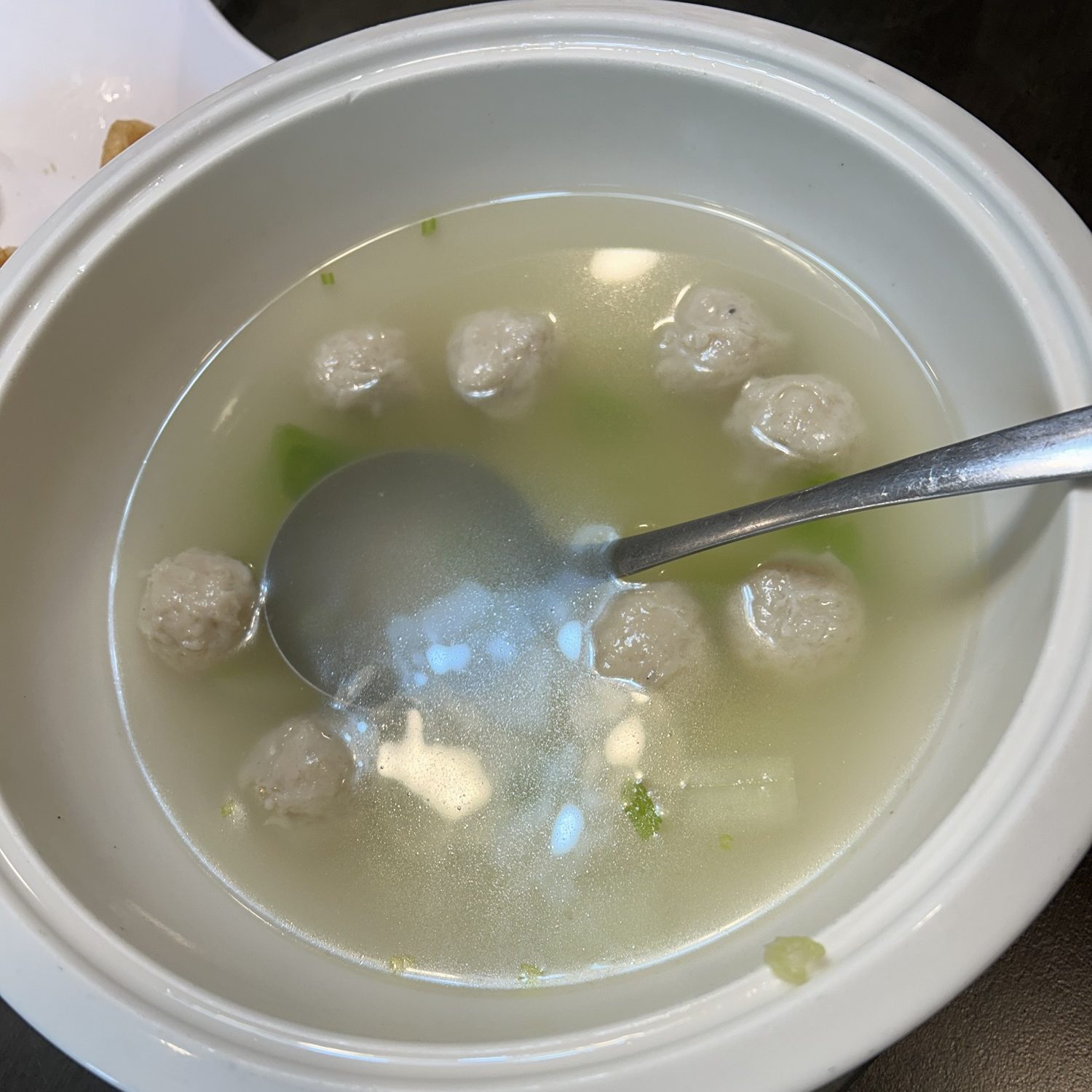
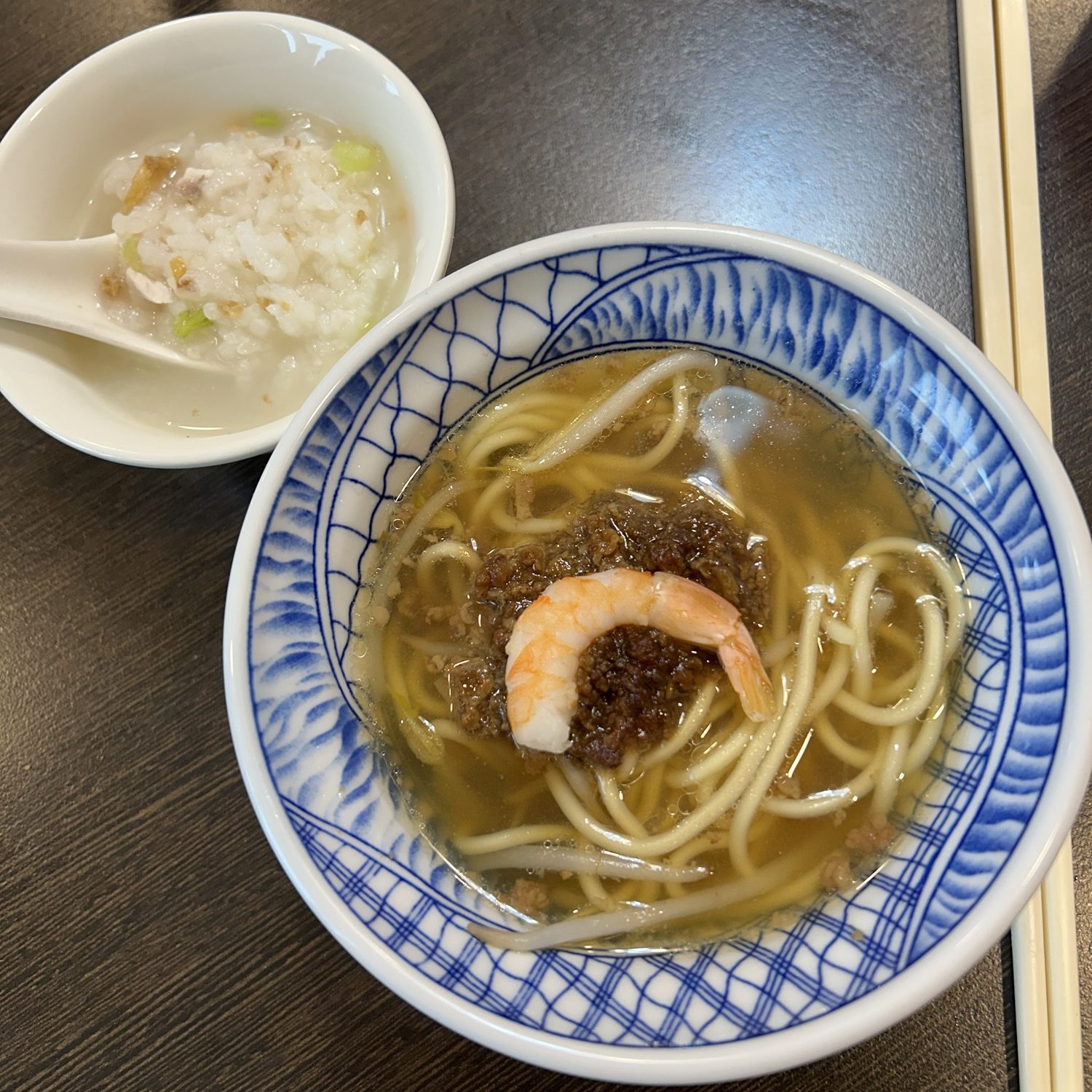
Arriving in Tayouan, we first ate some lunch which was a mix of many courses including lots of fish. Ramen, Gangee soup, shrimp rolls, squid balls, shrimp chips, oyster omelettes, a local salad, and more. It was all pretty fishy tasting, not my favorite, but it was fun trying a little bit of everything.
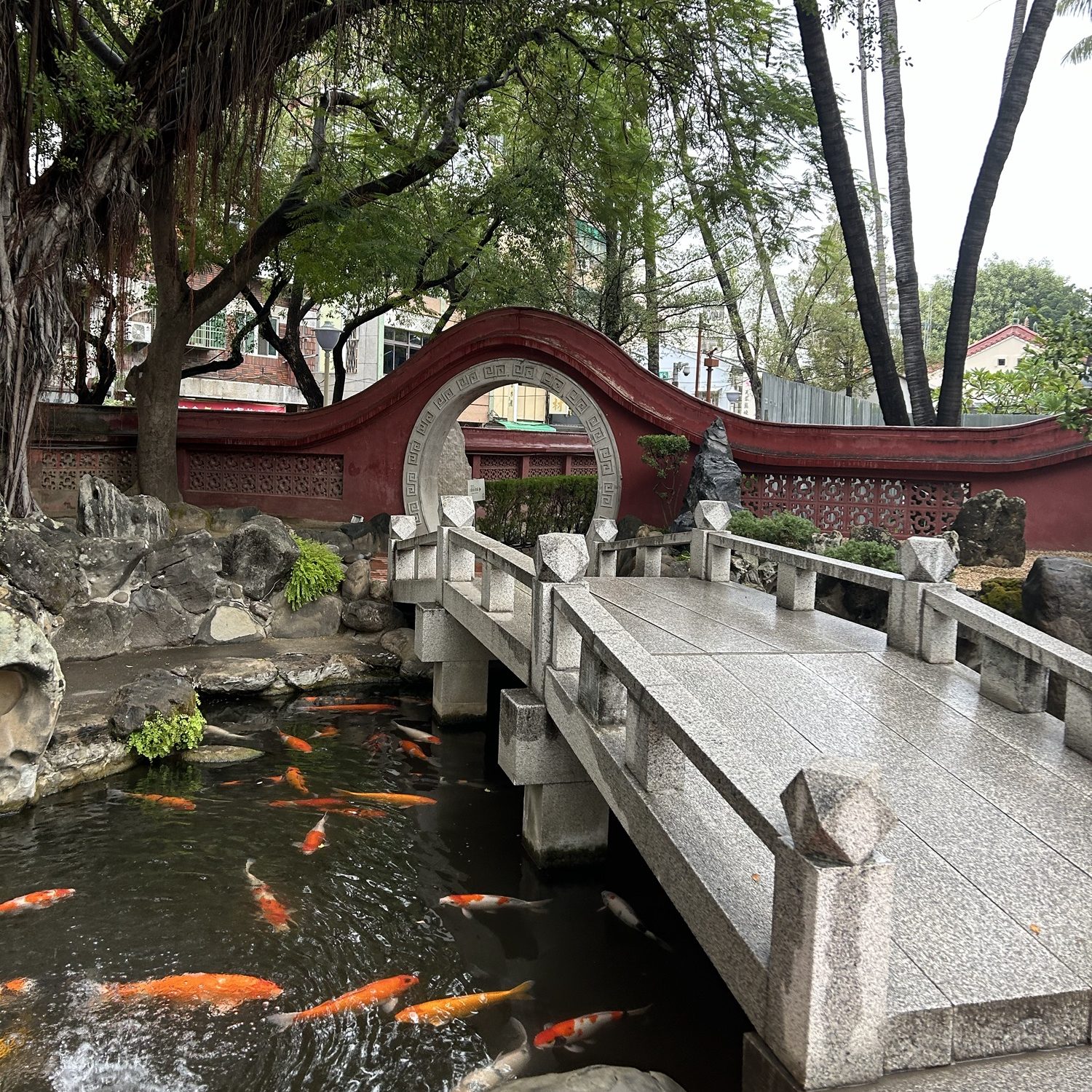
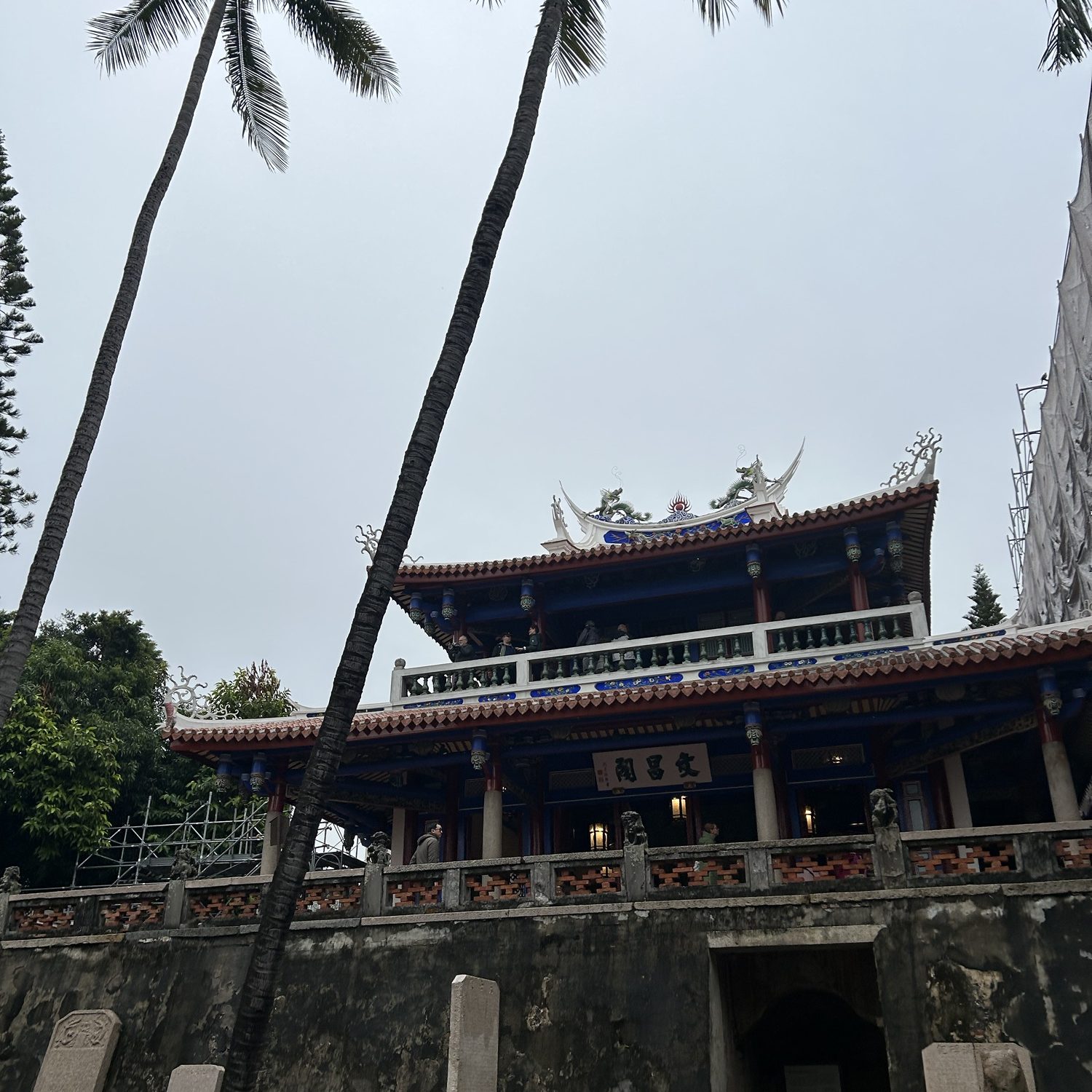
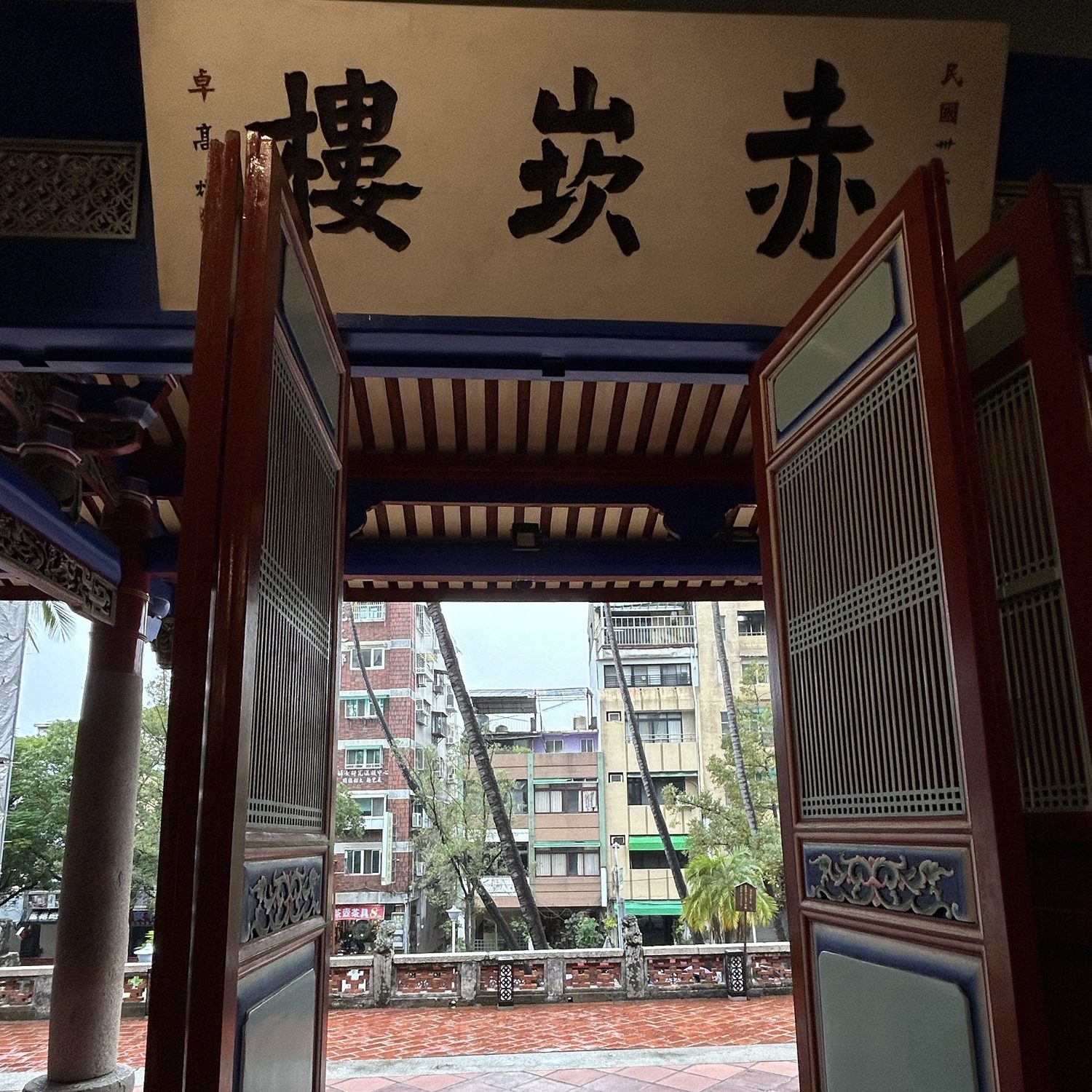
Then we headed to the Zeelandia Fortress, previously the capital and base of the Dutch, it is now refered to as the Anping Fortress. Close by is the Chihkan Tower used for economic and military purposes. This was so beautiful featuring a coy pond heading to the entrance.
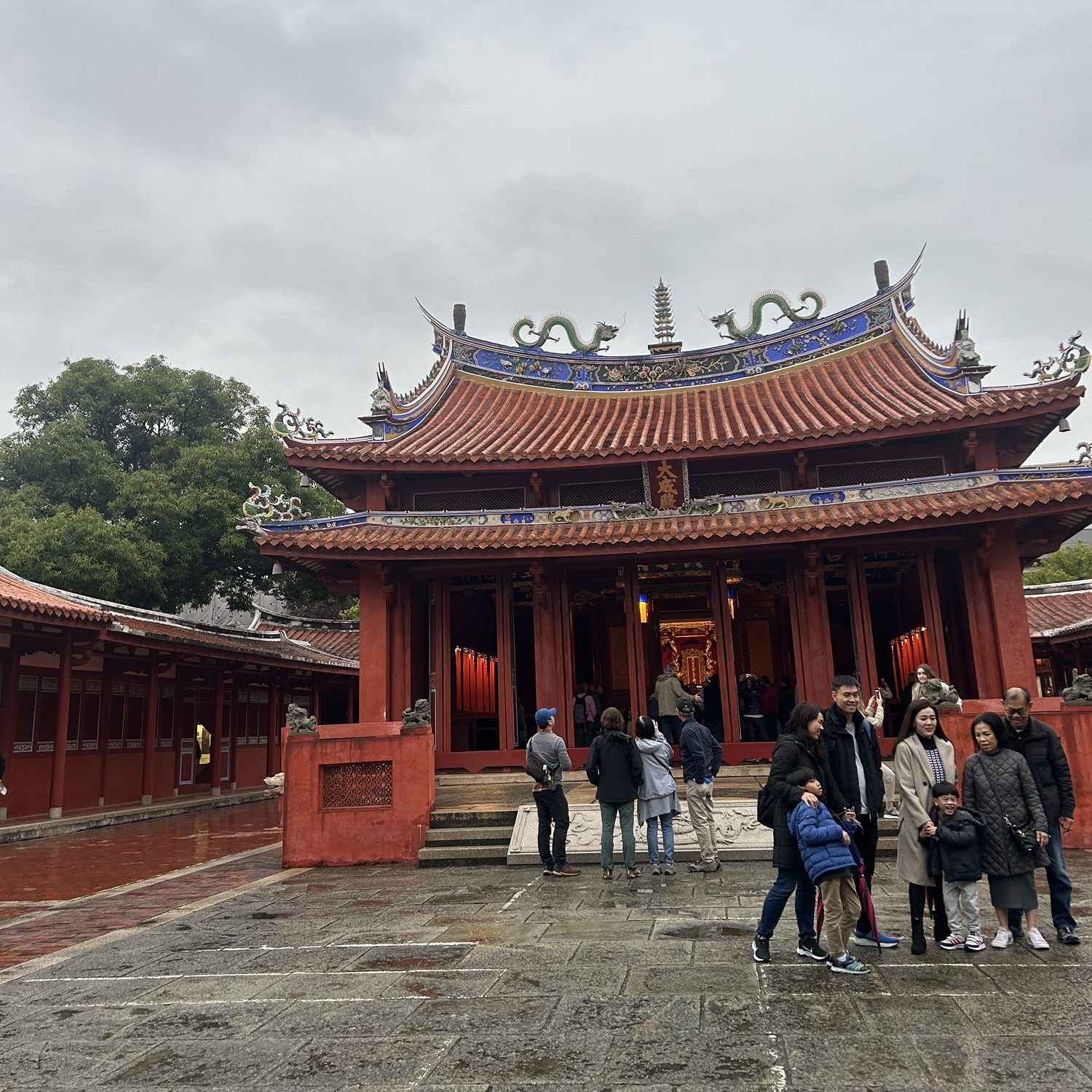

Then we drove to the confuscious temple. These temples only have family plaques and ceremonial instruments. These are from the Chinese, who respect their ancestors for their learnings. They are considered very simple in comparison to Taoist temples which adorn statues of numerous gods and vibrant colors and decorations. Also not to be confused with Buddhist temples, if you want to read about the difference between these temples check this article out, I found it interesting!

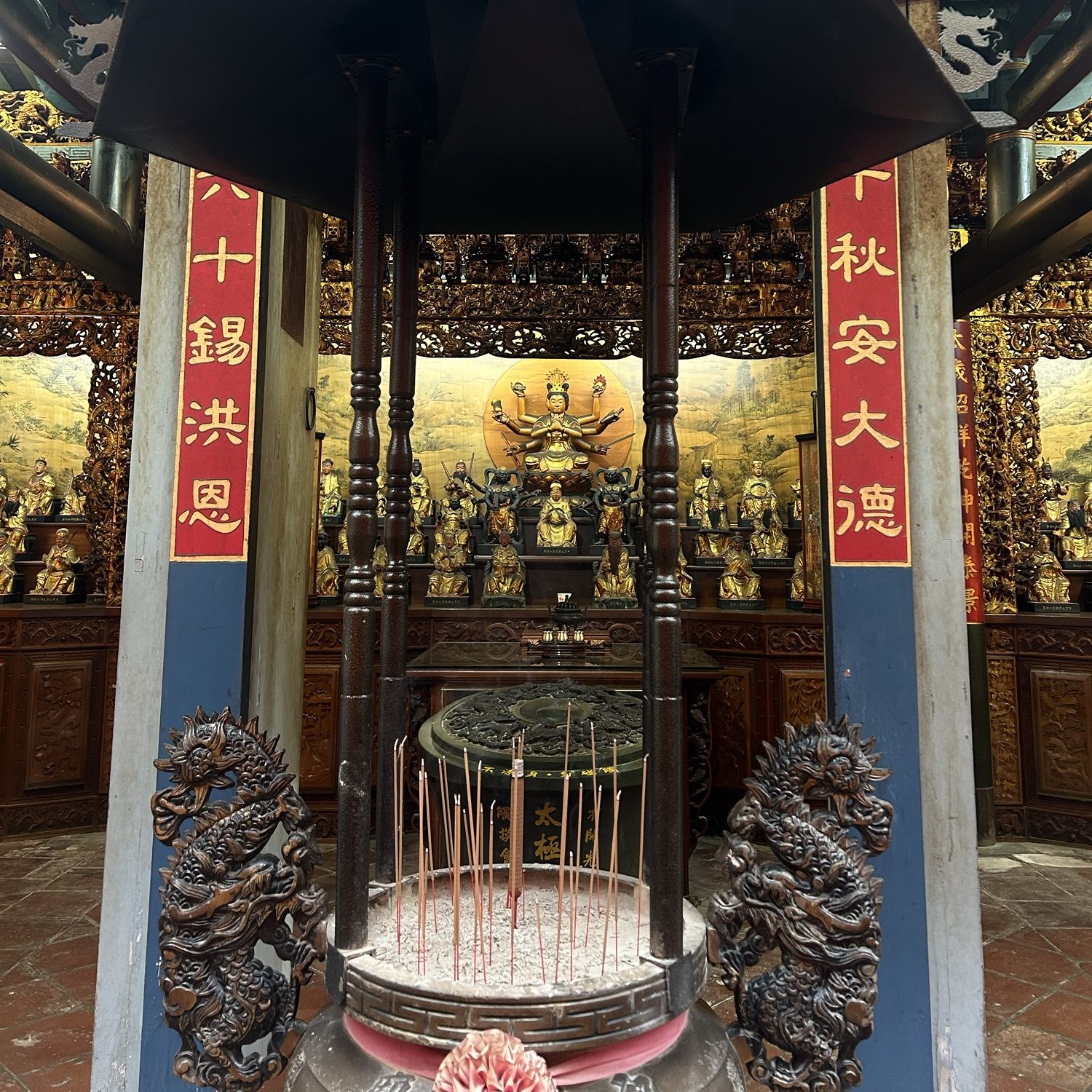
Across the street, my family and I wandered into a Taoist temple. It was a fascinating comparison of the differences in interior design. The temple was incredibly colorful, covered in intricate carvings, golden statues, and bright lanterns. People were actively praying with incense sticks, offering them to different gods as part of their rituals.
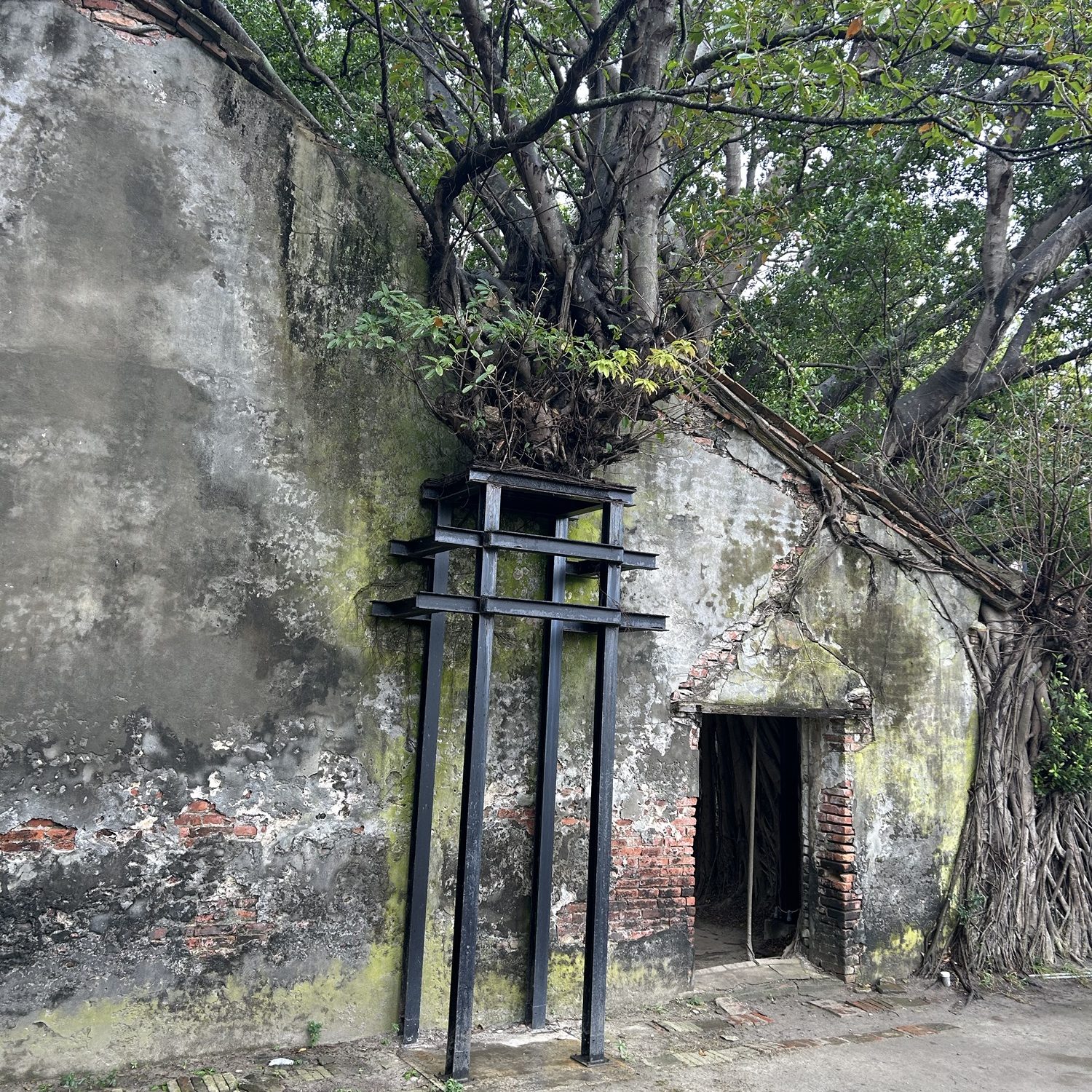
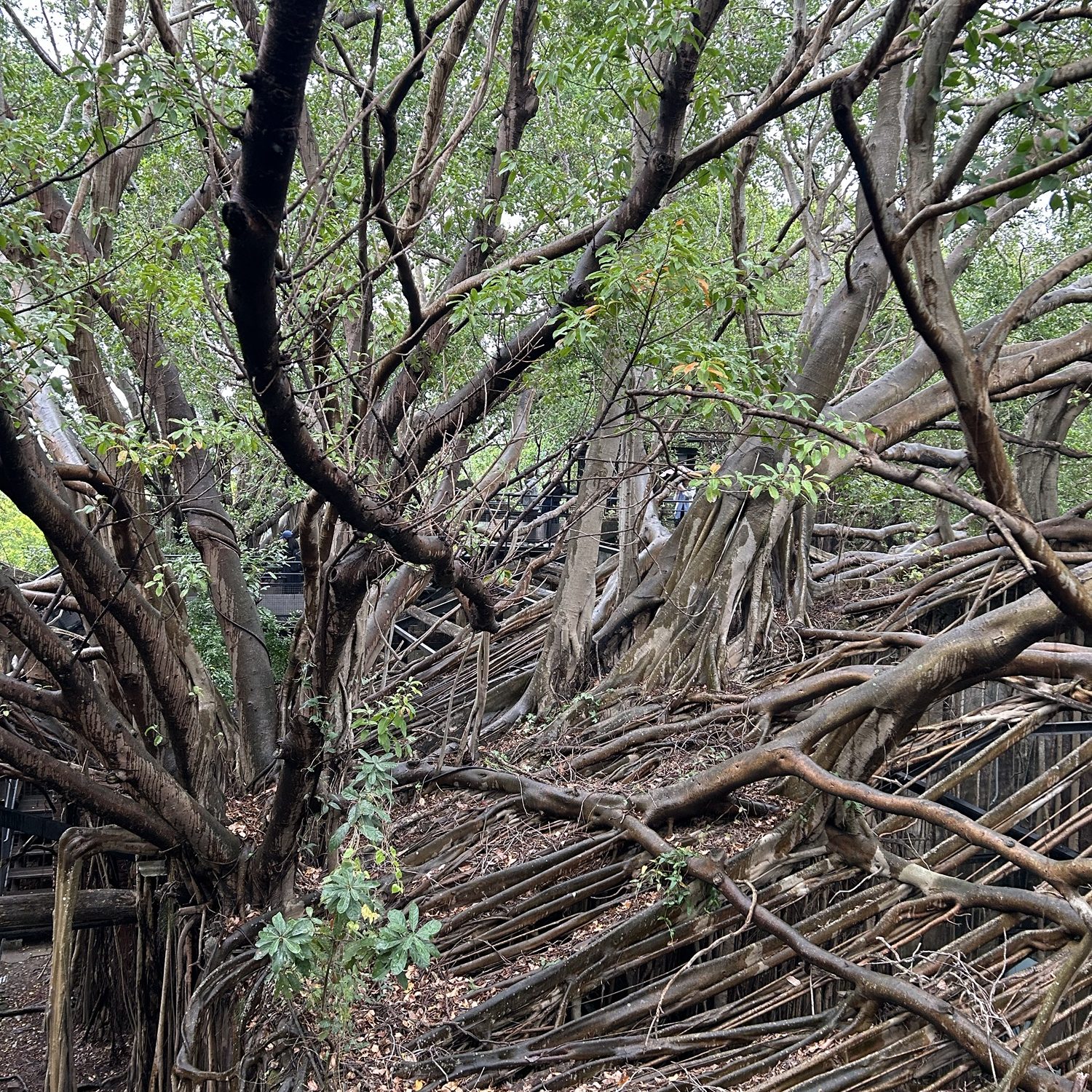
Next, we visited the Anping Tree House, which is not a house built in the trees like we would usually think of when hearing this. It is an old warehouse literally overrun by a banyan tree. We learned that this can be common if these trees aren’t taken care of. It’s crazy to walk through, but it is a very quick visit.
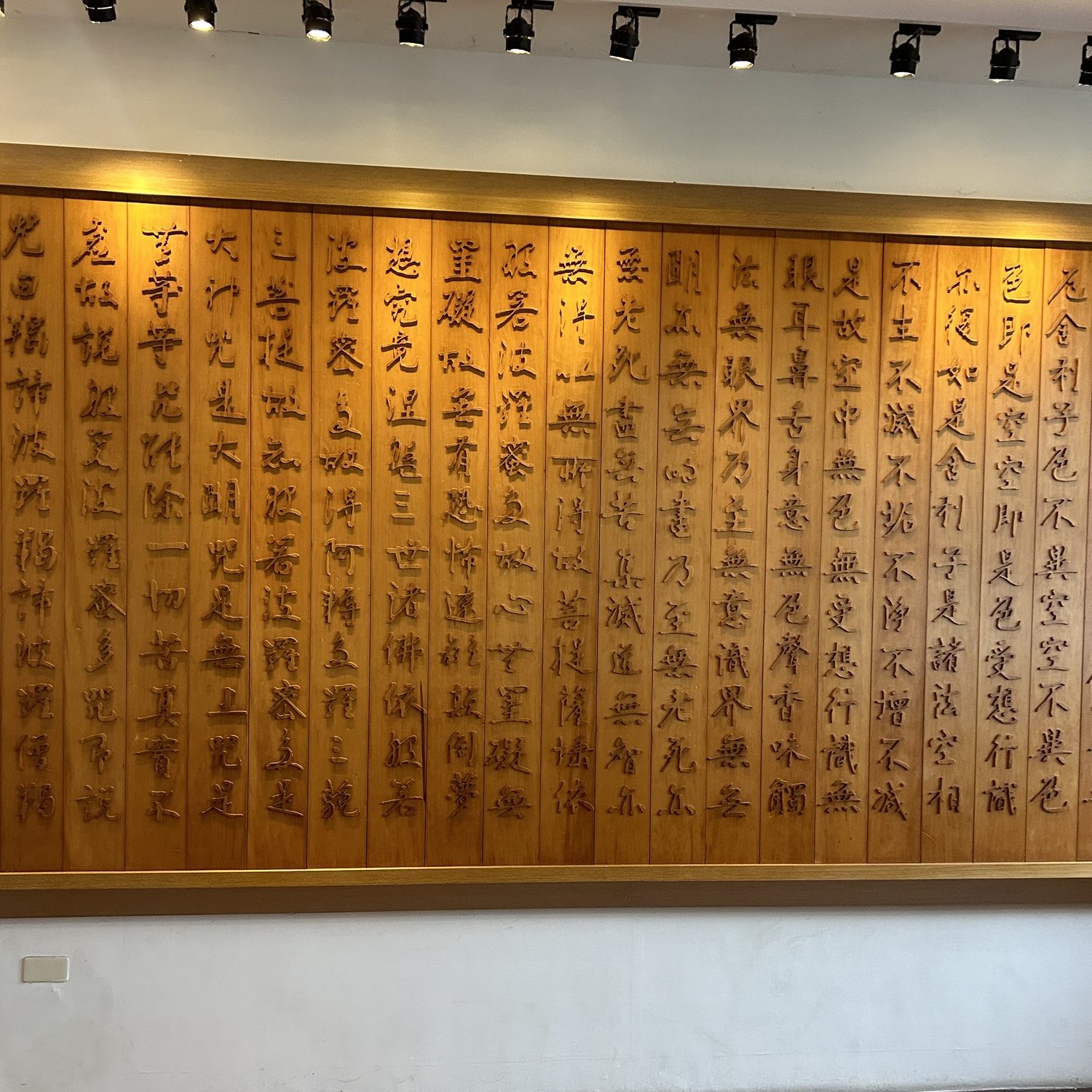
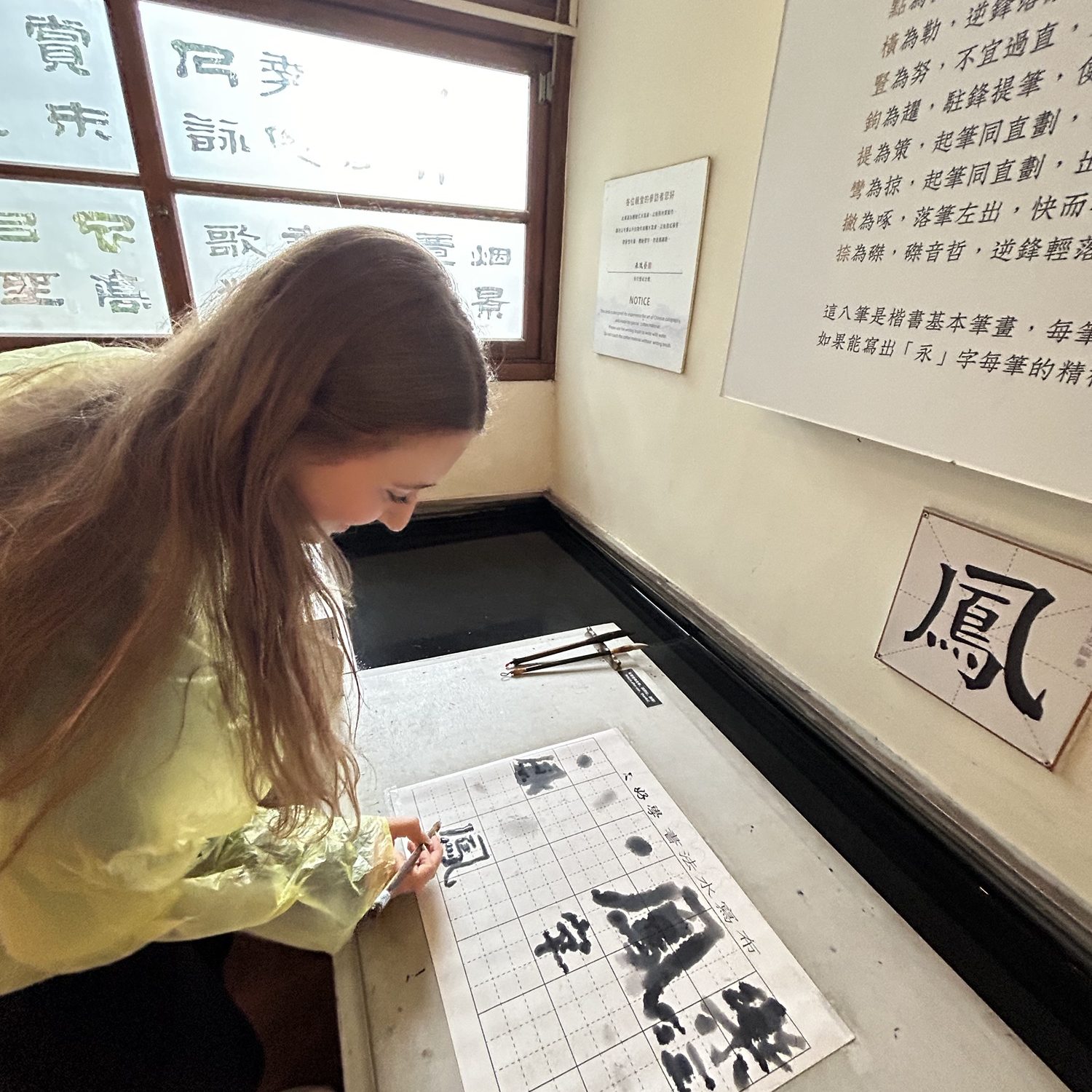
Right next to the tree house we went into the Pavilion of Shih Sao Jhou, famous for its calligraphy displays. Inside, we even got to try calligraphy ourselves, sort of. Instead of ink, we used special water-reactive paper, where the writing appears with water and then disappears as it dries, making it reusable.
This was the last stop and then it was time to head back towards the port. At the beginning of the ride back, while we were still awake, weome words like: Xièxiè, pronounced Sh-yeah-sh-yeah, which means thank you, and the numbers 1, 2, and 3; learned about s Yī, Èr, and Sān, pronounced, eee, er, saaahn. Our guide also told us about the famous night markets in Taiwan. They have food, games, and trinkets. Liouhe tourist night market is open from 6 till midnight and she recommended that we visit it before leaving. Since the boat would be in port for two days, we could stay out later. With this being the case, one of my sisters, my dad, and I decided to stay out a little later and check it out!
We ordered an Uber and arrived about 15 minutes later at the Liouhe Night Market. The weather had been cold and rainy all day, and it was no different at this point. Arriving with an uber, the street had been transformed into a bustling market, lined with food stalls and little shops.
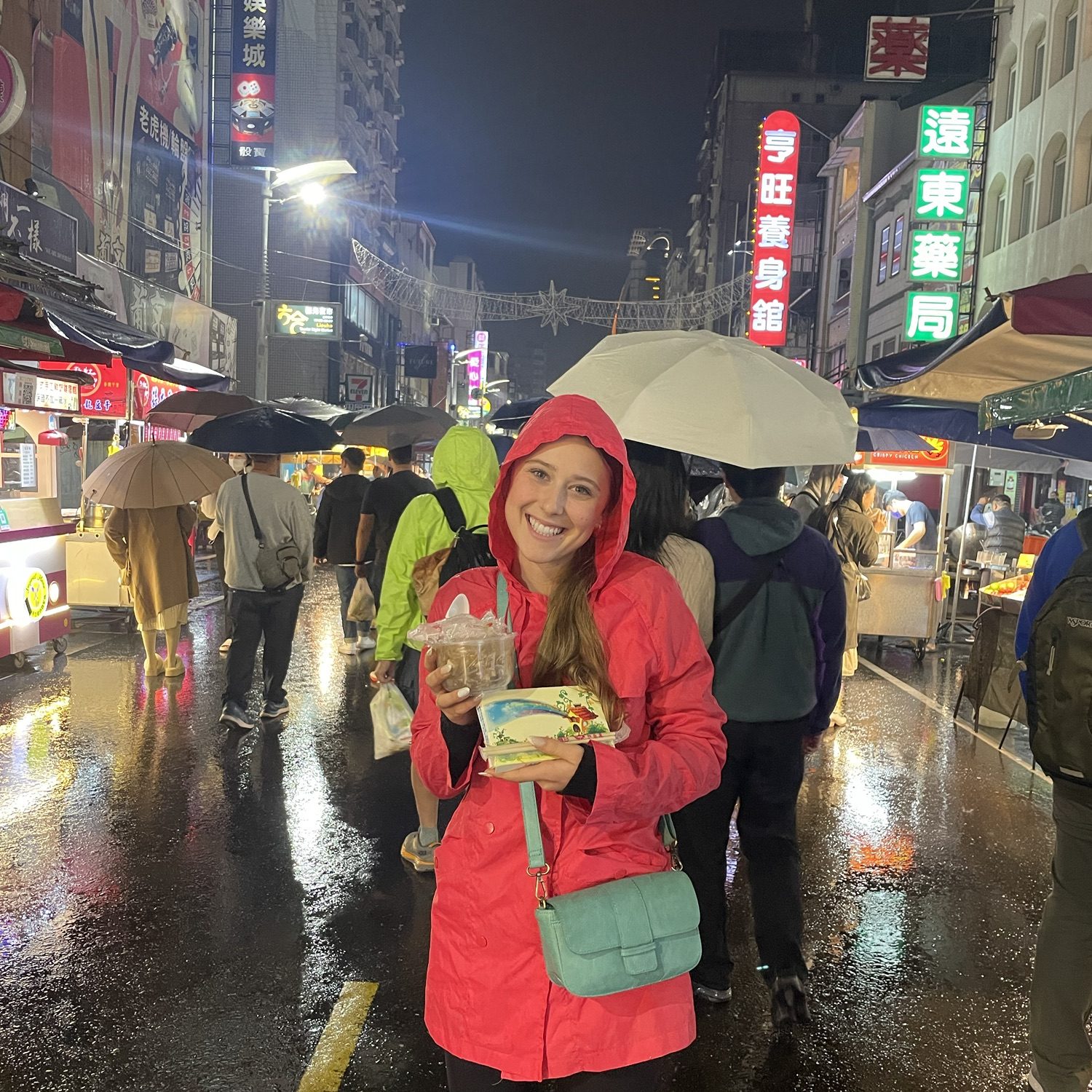
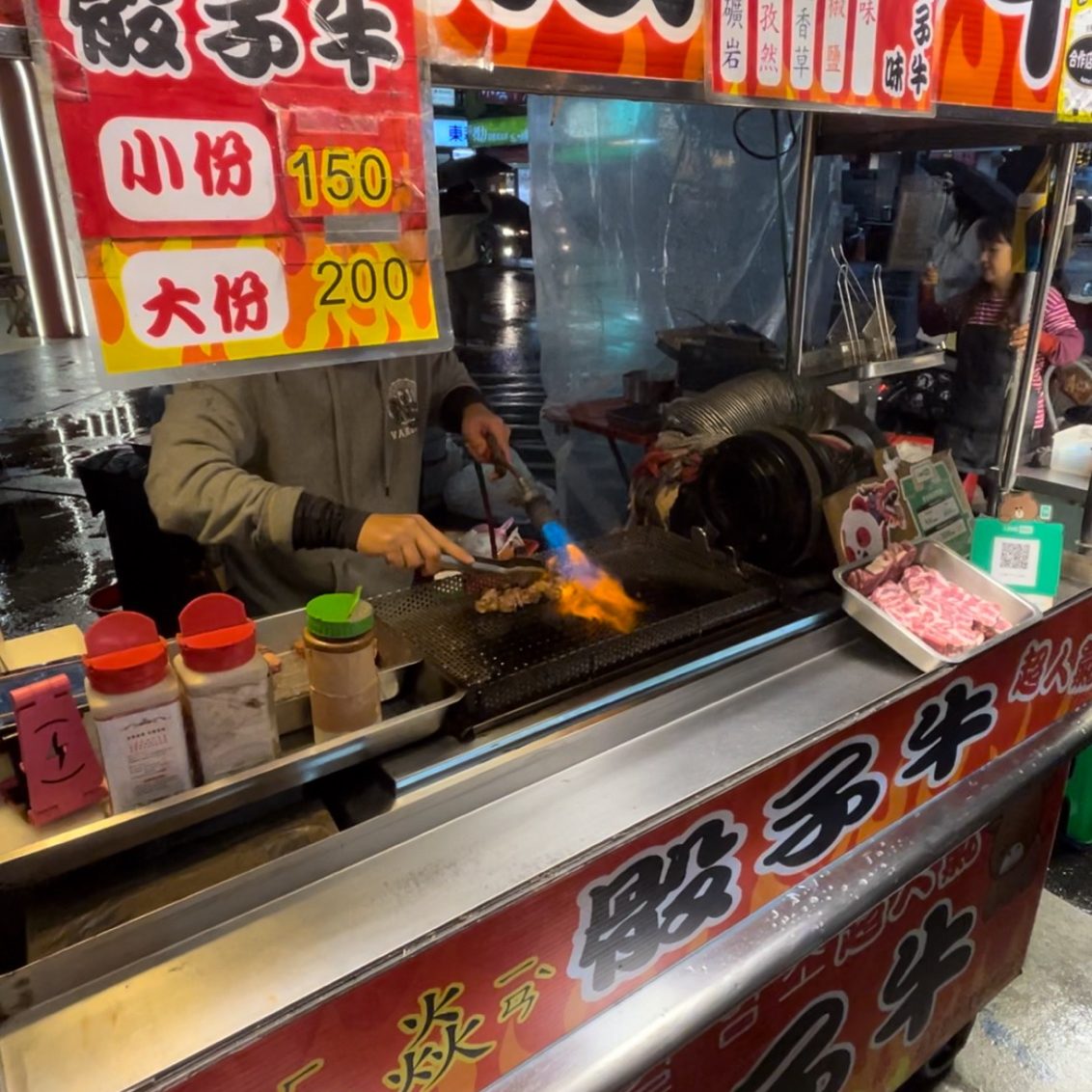
We kicked things off with steak bites from a stand where they torched the meat with a blowtorch—so good! From there, we kept grabbing little bites from different stalls: dumplings, tofu soup, mochi, and bubble tea. Everything smelled too good to pass up, except for the stinky tofu stand, which did not smell good at all.
At one point, we wandered into a small anime shop filled with figurines and pinball machines. My dad was curious about playing and asked two boys nearby how to start and where to insert money. Instead of just explaining, they handed him some of their balls and showed him how it worked—so nice of them!
As we walked farther down the street, the scene was pretty sureal—overhead lights reflected off the wet pavement, making everything glow. The pork dumplings were so good we had to circle back for seconds before leaving.

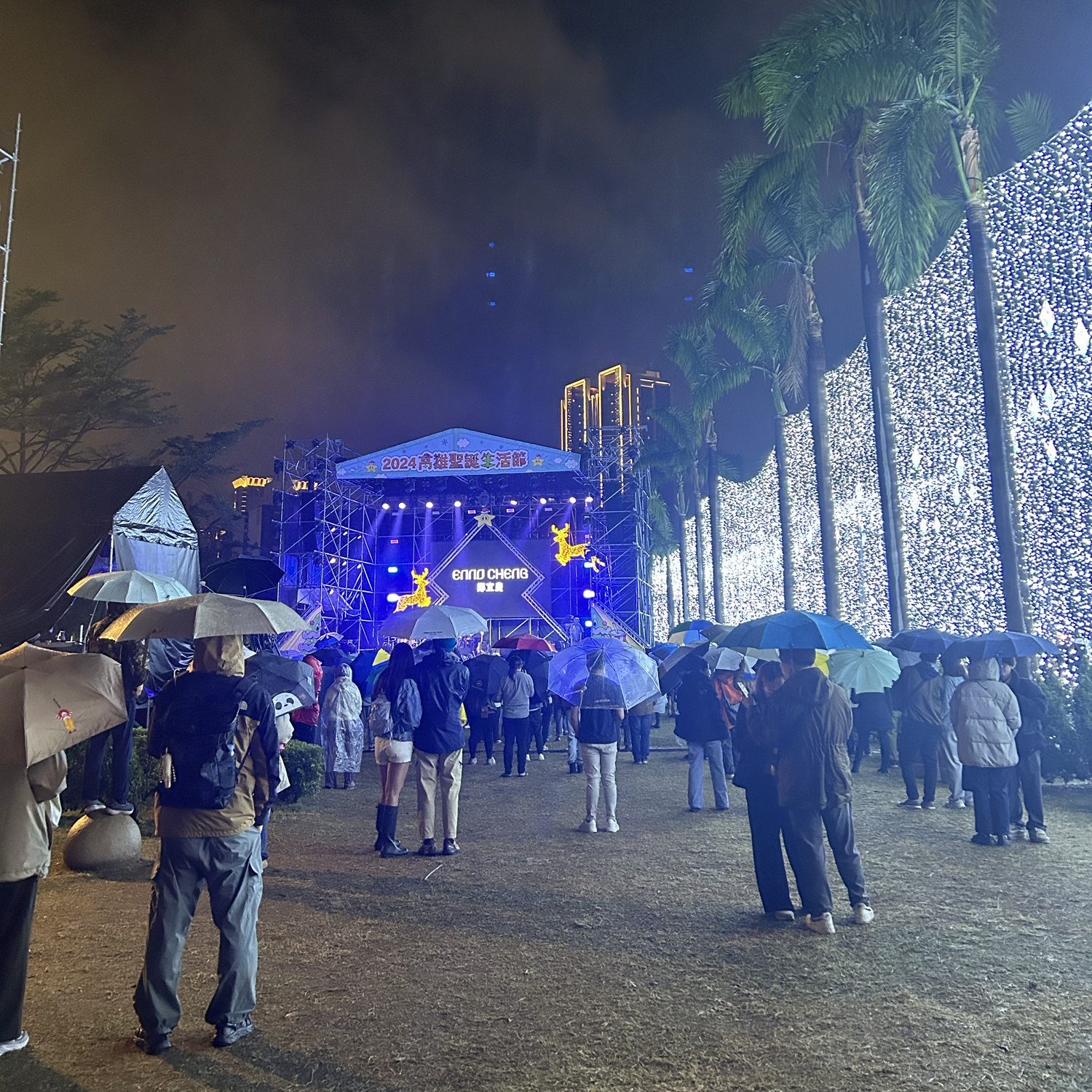
On our Uber ride back to the port, we spotted a Christmas market and, on a whim, decided to hop out and check it out. Just like the night market, it was packed with food stalls, but at this point, we were way too full to eat anything else. Instead, we wandered through the trinket stands, browsing all the little souvenirs and handmade crafts.
At one point, we stopped by a small stage where a mini concert was happening. We couldn’t understand anything, but it was actually pretty good. It was the perfect way to end the day, and we were so glad we didn’t just head straight back. We got to see and experience even more than we had planned.
Day 3 of 14:
We decided not to book a tour on this day and instead explored Kaohsiung on our own. One thing we learned from our tour guide the day before was that in the 1990s, Taiwan introduced a major tax to prevent littering, which is very noticeable in that it’s incredibly clean everywhere. Their trash trucks even come by almost daily, and the funniest part? They play music that sounds just like an ice cream truck! It was hilarious to actually see it in person. Imagine hearing that song and getting excited for a sweet treat, only to realize… nope, it’s time to take out the trash!
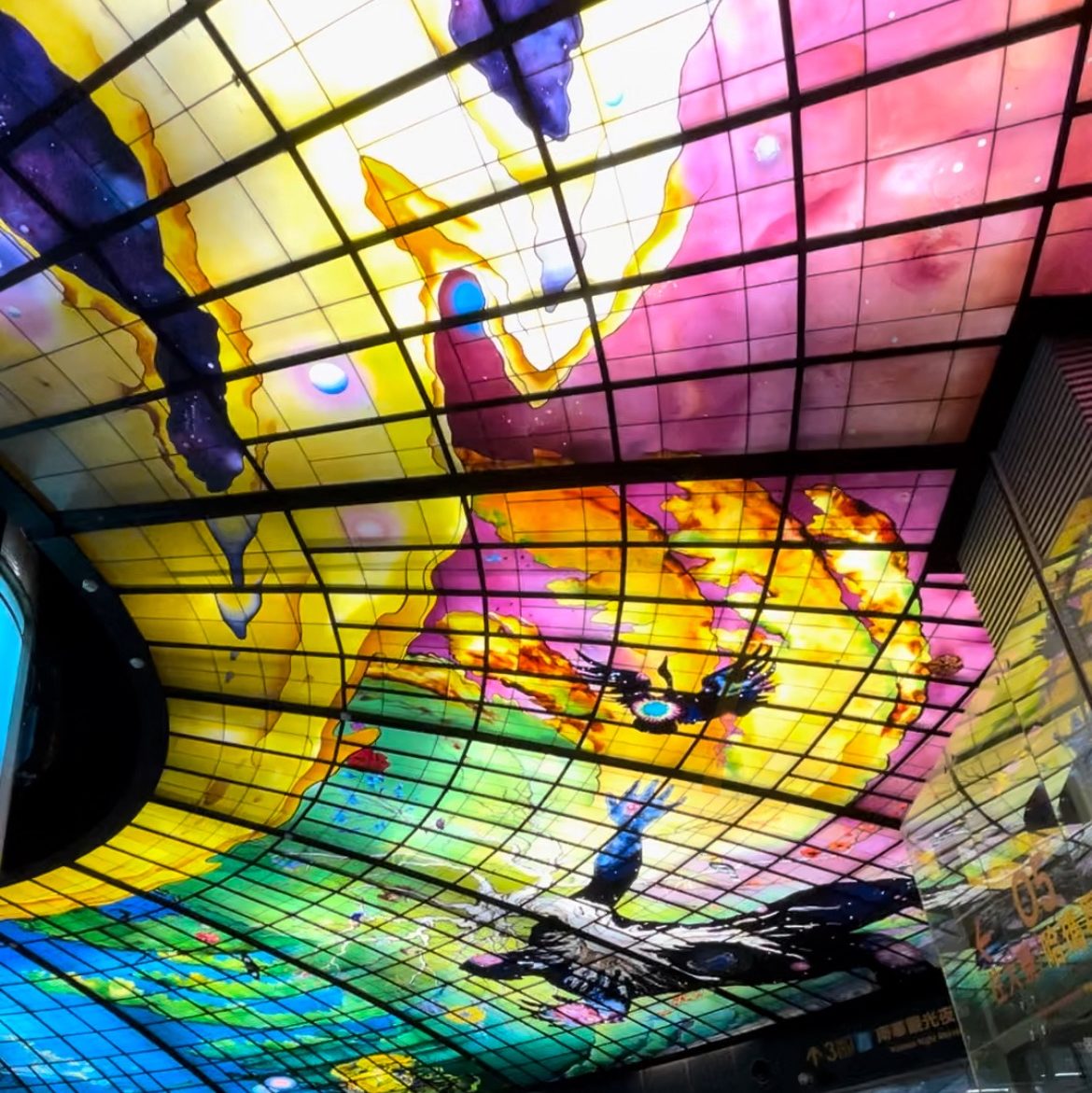
We saw firsthand just how clean the city is when we stopped at Formosa Boulevard Station, home to a famous stained-glass ceiling and a light show at set times. The ceiling itself was gorgeous, but honestly, the light show was a little underwhelming. The metro was really spotless thanks to their strict no eating or drinking rule. Pretty much every subway-, metro-, you name it- station that I have ever been to has been a trash hub. Here, it was the complete opposite!
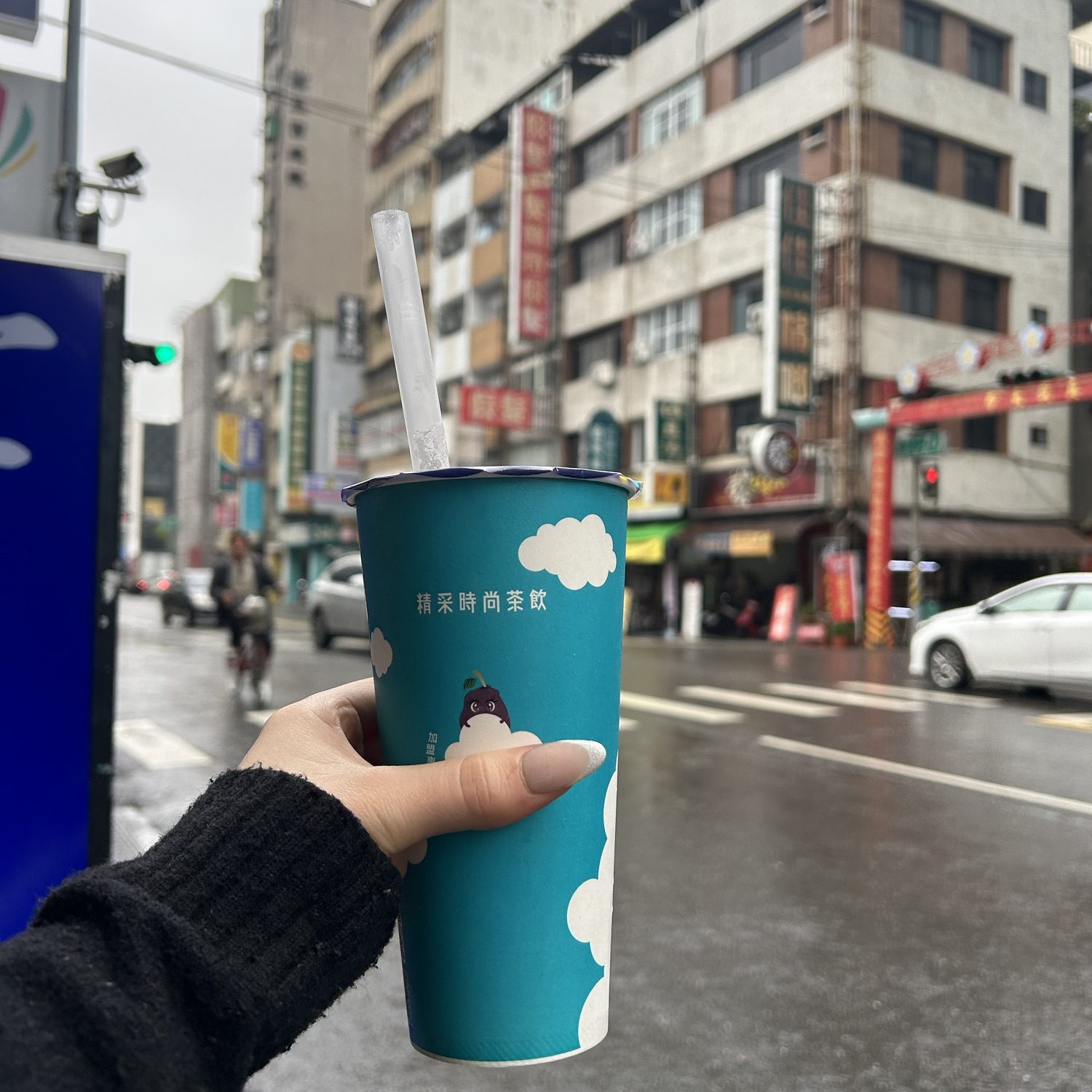
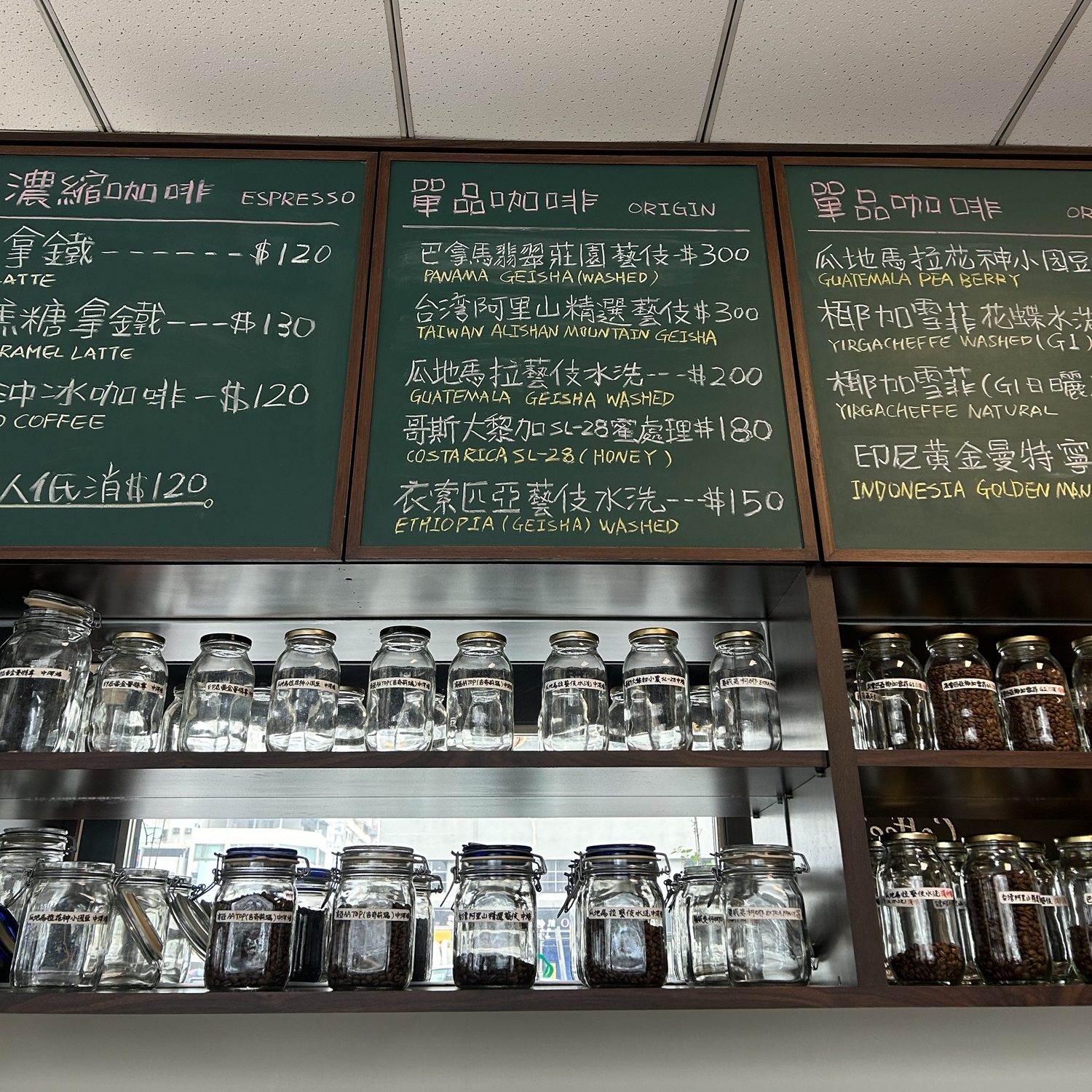
Walking around afterwards, I grabbed a Taiwanese coffee from a café in the Xingxing District. Not even kidding, one of the best coffees I’ve ever had. It was pricey, but they prepared it traditionally—grinding the beans fresh and using a slow-pour filter. So worth it. And of course, we had to get a bubble tea afterward, which is everywhere to find.
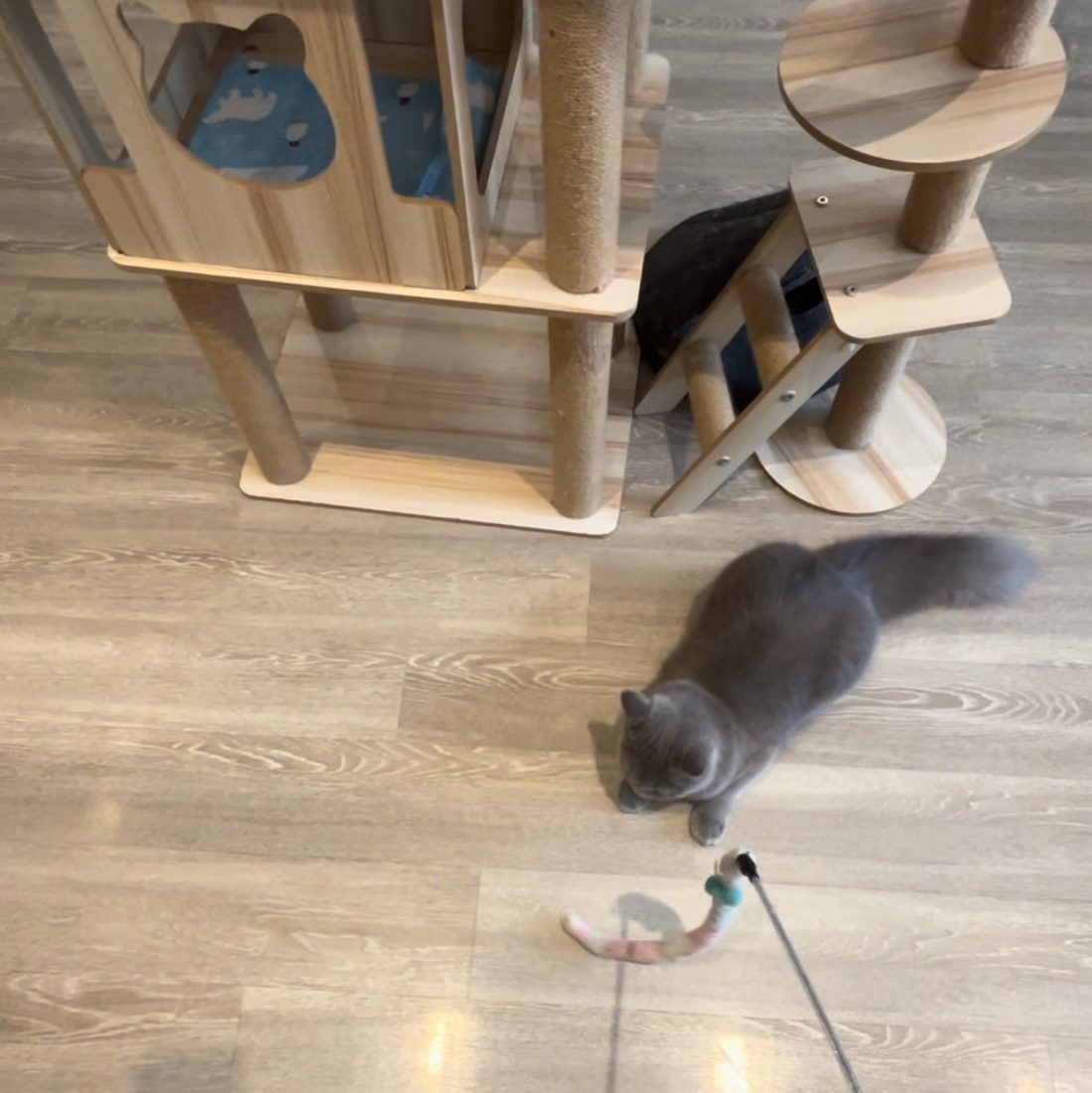
On our way back, we randomly stumbled upon a cat café! I’d never been to one before, and we had time. There were around twelve cats roaming freely and even more lounging in little kennels. We hung out, enjoyed some desserts and drinks, and honestly, I could have stayed there way longer! But sadly we had to go back to our awaiting cruise, ready to set sail for the next destination.
Highlights:
- The Taipei 101 in Taipei
- The Confuscious Temple in Kaohsiung (Anping District)
- The Liouhe Tourist Night Market in Kaohsiung (Xingxing District)
Overall, Taiwan was amazing, and I’d love to visit again—maybe explore some smaller towns or even hike Alishan Mountain next time. The country was clean and the people were friendly. At times, there was a small language barrier, however, everyone was still friendly! Now, on to the next stop: the Philippines!



 Around the World with Abigail