
Hello readers! With college starting in October, I had time on my hands. The only thing I had to do during the break was to move from Gießen to Nürnberg, Germany. Moving all my stuff to the new apartment felt like a lot to handle alone, so I asked my parents if they’d want to help out by coming and renting a car. After a little persuasion and the idea of turning it into a European trip, they were in and booked their flight to Germany!
And that’s how this Europe Summer trip came to be—a visit to five countries in two weeks. This post is about the first stop: Vilnius, Lithuania.
After dropping my luggage at my new apartment and saying a quick hello to my roommate, we were off the following morning. Great quick first impression… oops! At least he knows right off the bat how much I love traveling!
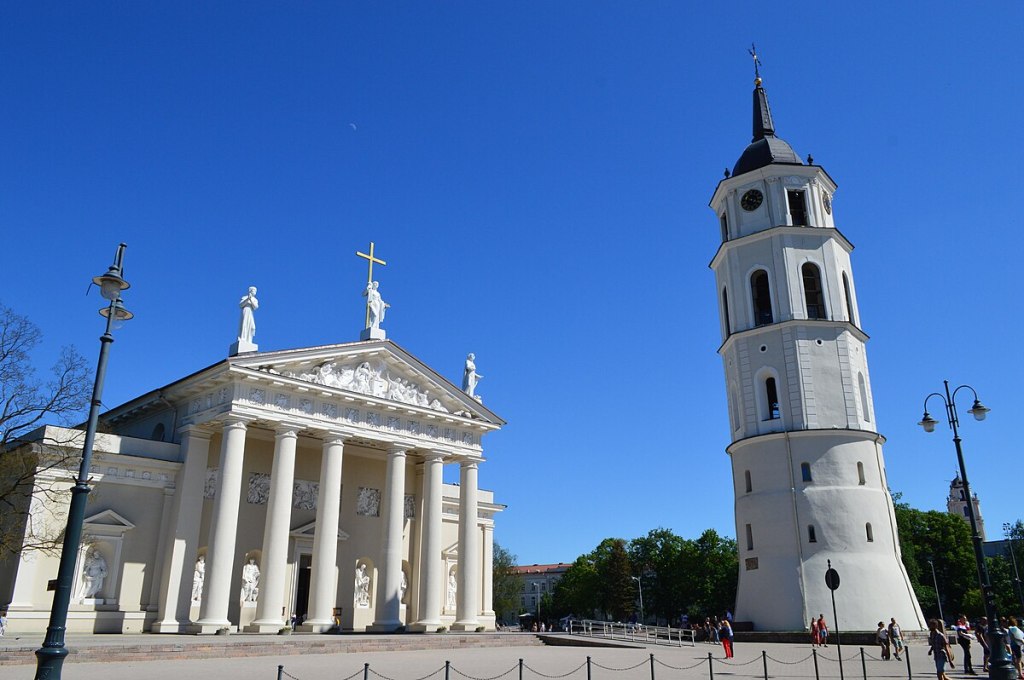
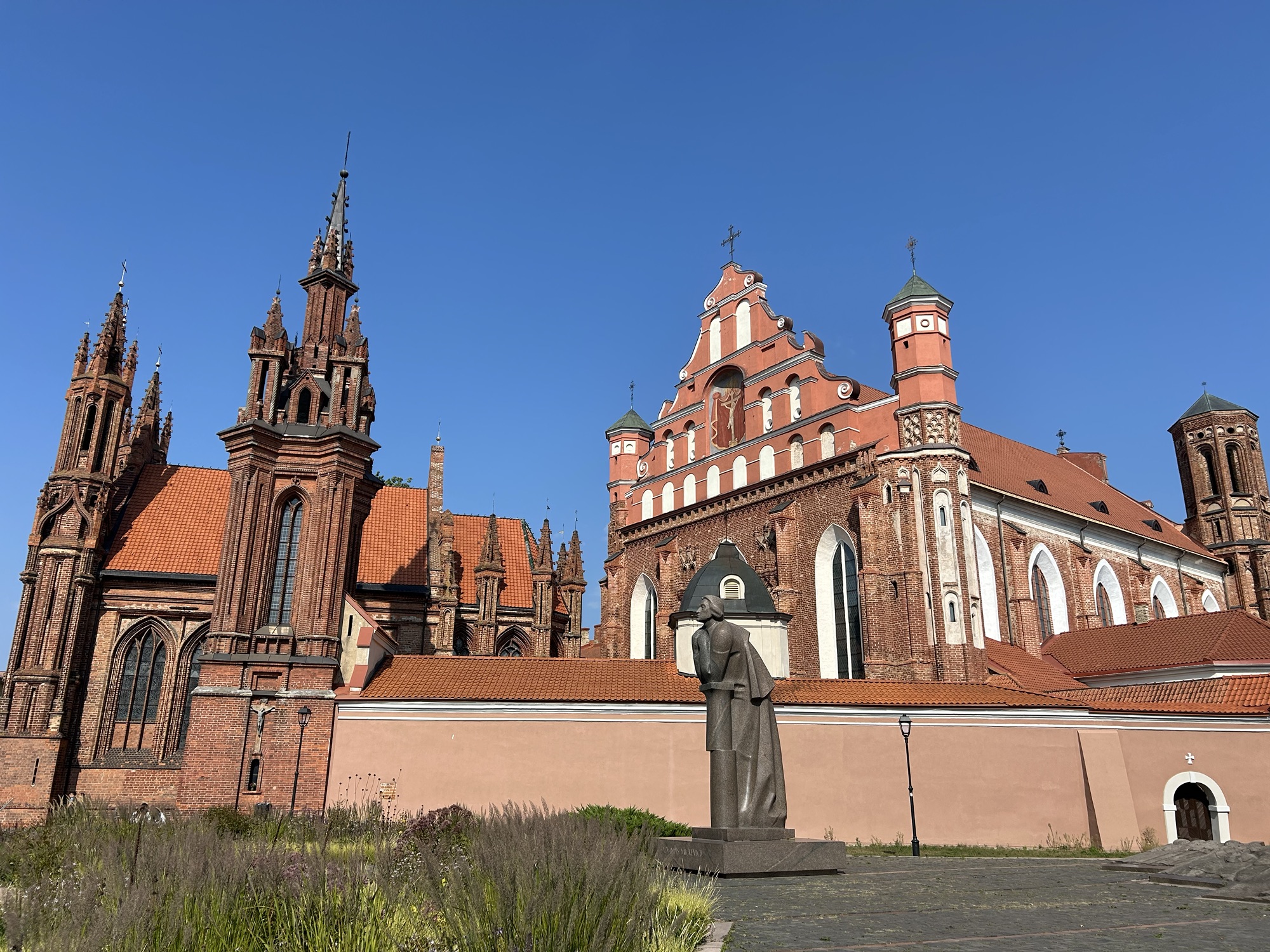
After a quick flight from Nürnberg, we finally arrived in Vilnius, Lithuania. Our Uber driver mentioned that Vilnius is one of five UNESCO World Heritage sites in Lithuania. It’s recognized for its historic Old Town, which showcases a blend of Gothic, Renaissance, Baroque, and Neoclassical architecture. The city is also famous for its numerous churches—about 53 in total! On the short ride to our accommodation, we got a glimpse of this through the many beautifully illuminated churches standing out between the passing buildings.
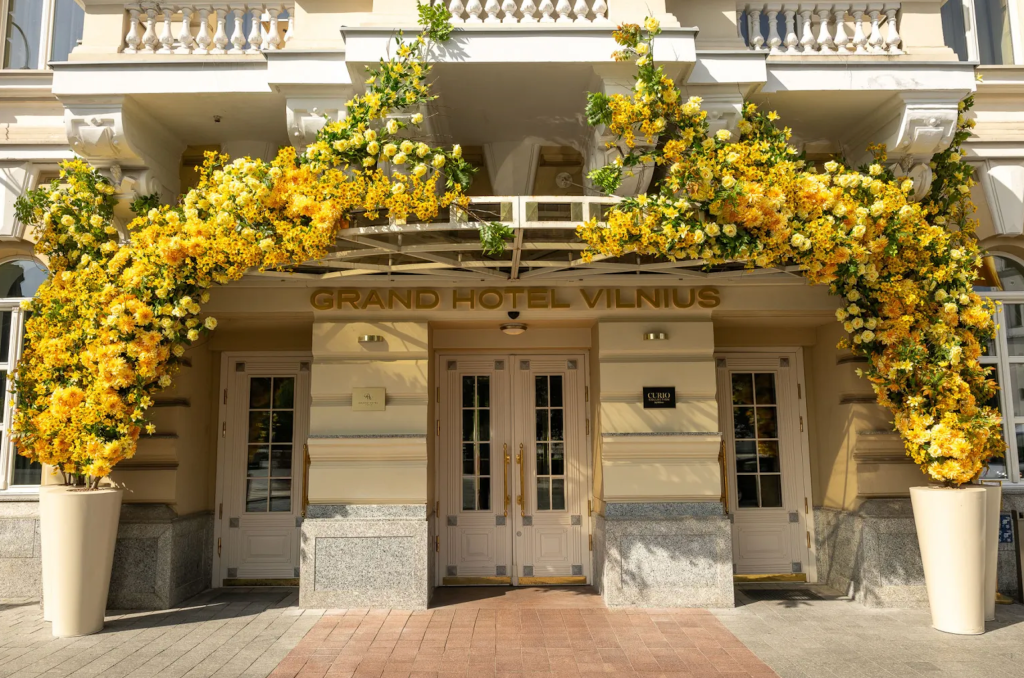
Upon arrival at the Grand Hotel Vilnius (a Hilton), we were greeted with champagne and chocolates—a delightful start to our stay. Our room was lovely, with a breathtaking view from the patio that overlooked Vilnius Cathedral and the surrounding historic area.
Breakfast the next morning was equally amazing—pastries, chocolates, freshly prepared dishes, and perfect coffee. Shortly after, our private tour guide picked us up, and we set off to explore the city.
Cool fact: On September 1st, all students in Lithuania take part in a traditional celebration to mark the start of the school year. They attend a church service to pray for the year ahead and give their teachers gladiolus flowers as a sign of respect. As we drove through various towns, we saw students and teachers gathering to celebrate this tradition.
First Destination:
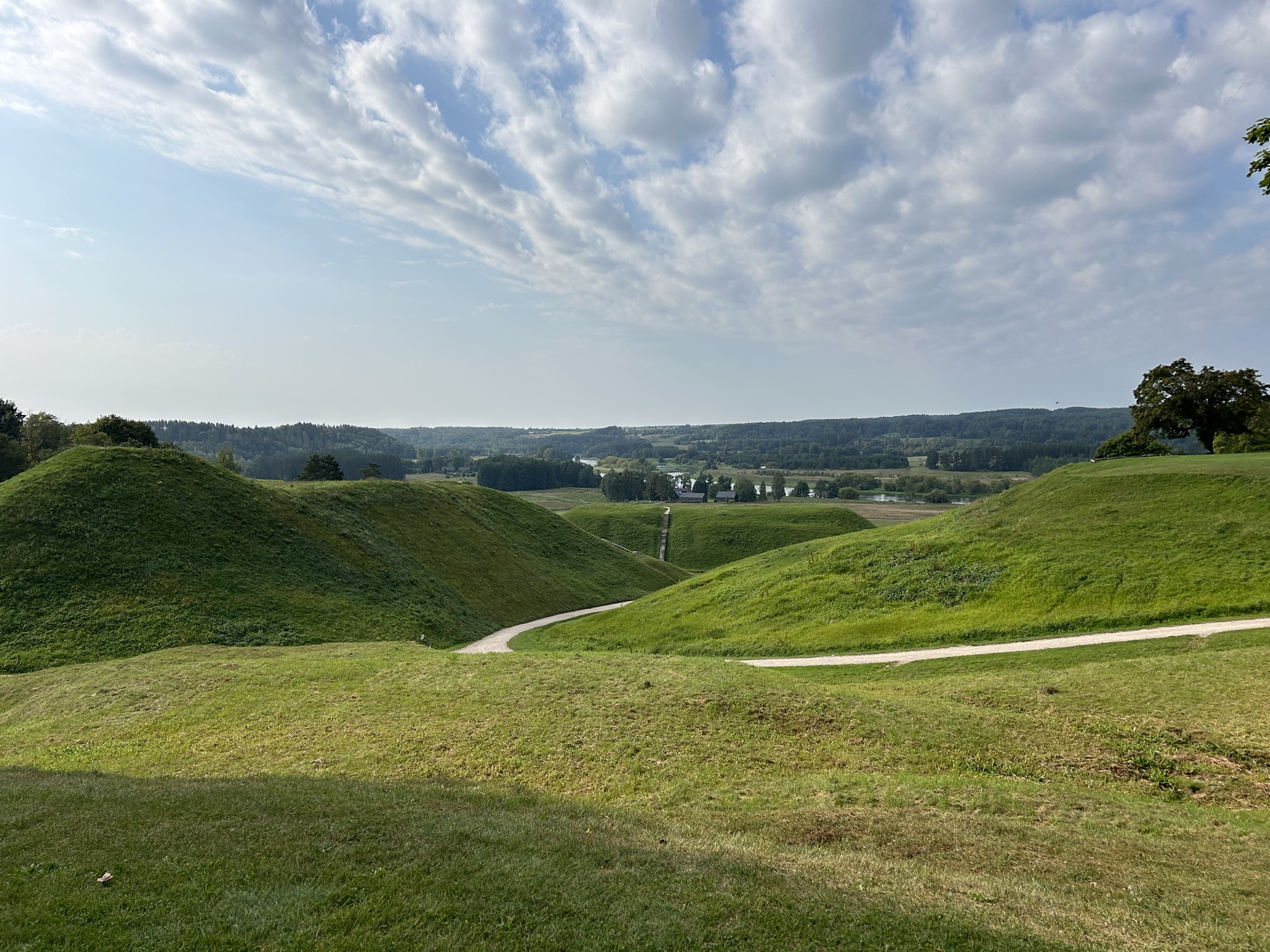
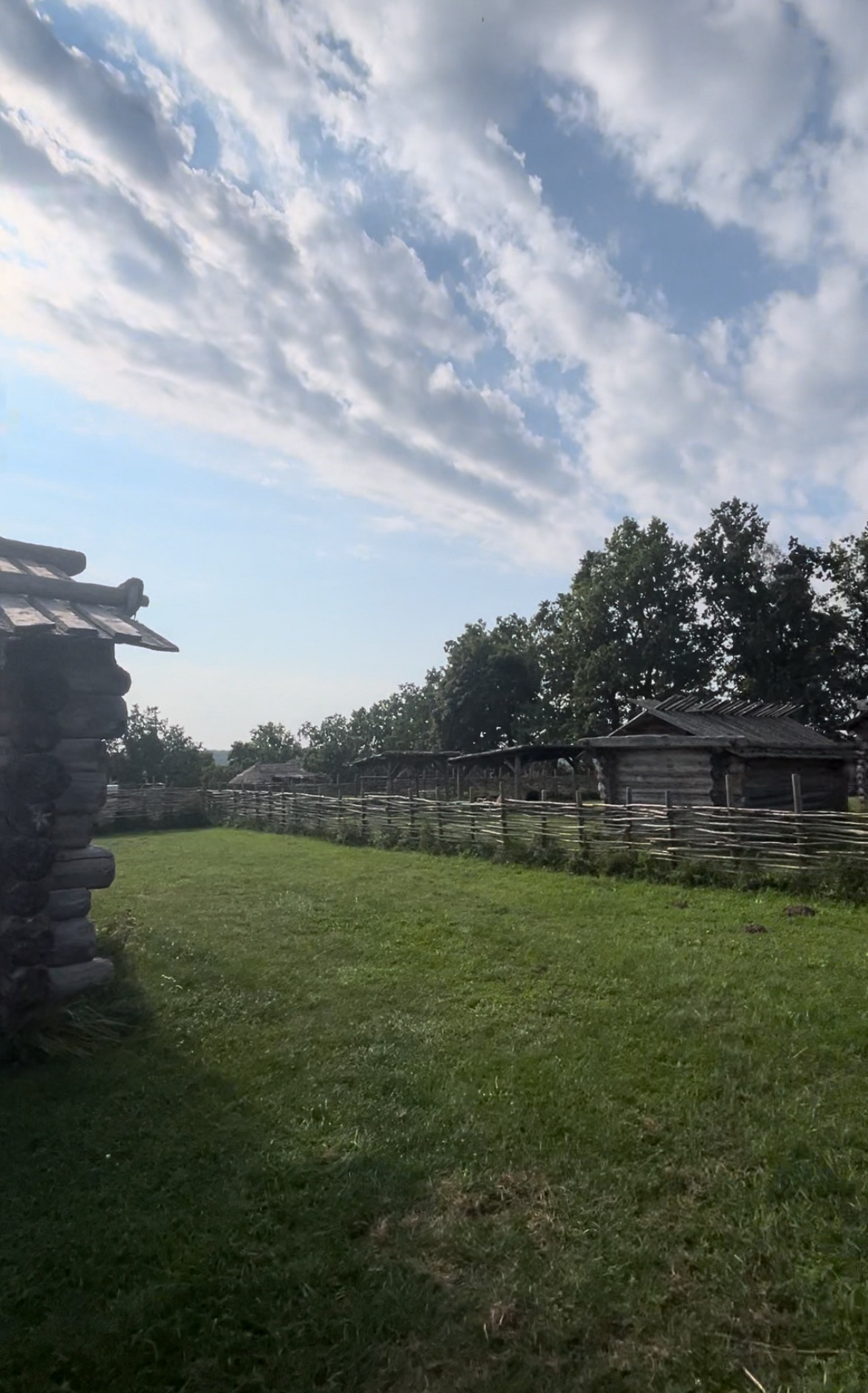
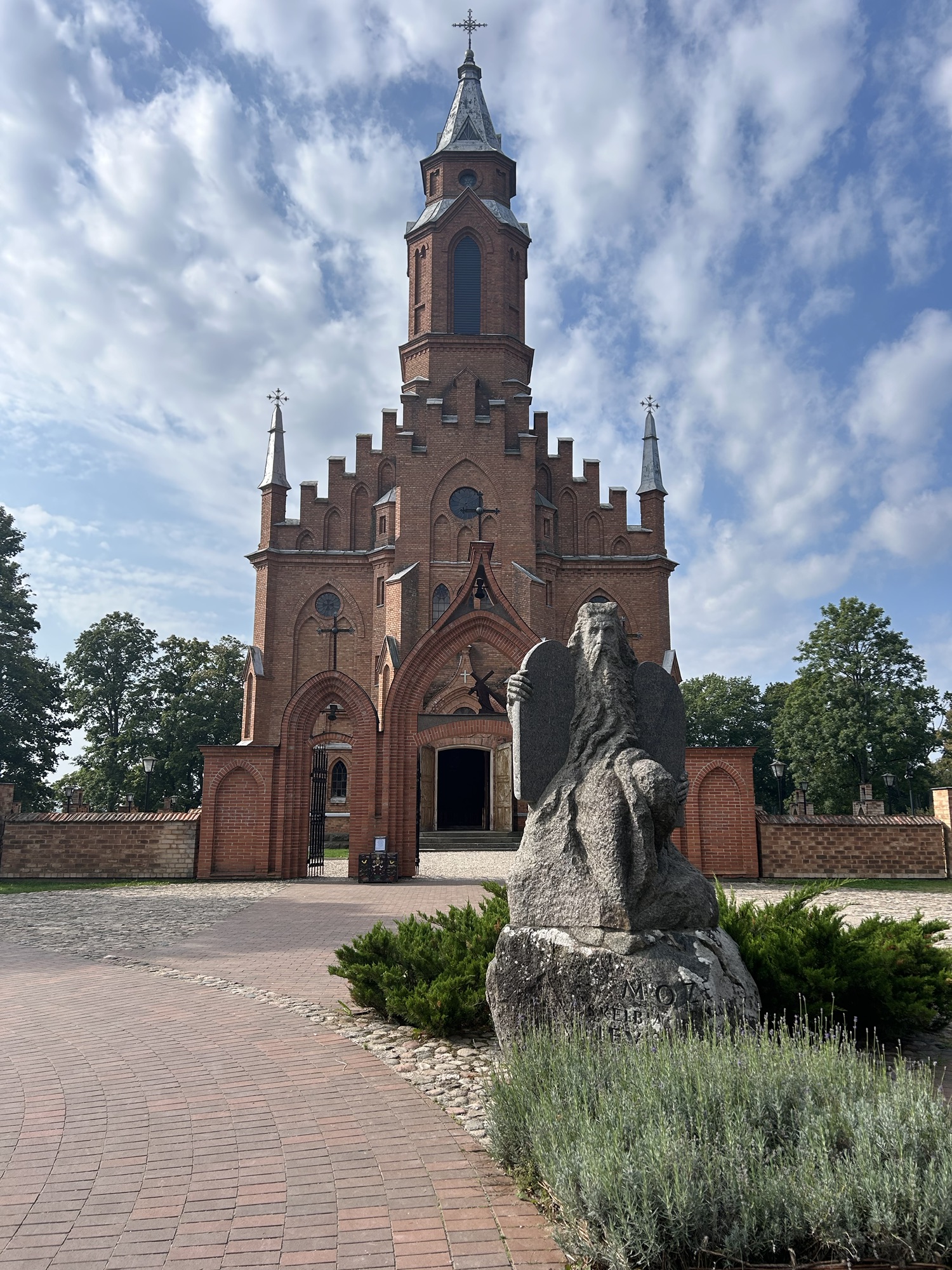
Our adventure began at Kernavė, the ancient Lithuanian capital and another UNESCO World Heritage site. We were welcomed by a charming Catholic church at the entrance, setting the tone for our exploration. As we continued, the path revealed a stunning view of five ancient hill forts, strategically positioned for defense, particularly against the German crusaders across the Neris River. Though Lithuania has around 860 hill forts, these five stand out for their close proximity and historical significance.
The story of Kernavė took a turn in 1390 when a fire wiped out the settlements. It wasn’t until a 1979 flood exposed buried artifacts in the hills that the site’s importance was rediscovered. A bit further, we visited a restored homestead from the 13th and 14th centuries. Excavations revealed that this town was once a center of wooden structures, home to artisans such as jewelers, blacksmiths, and antler carvers.
Second Destination:
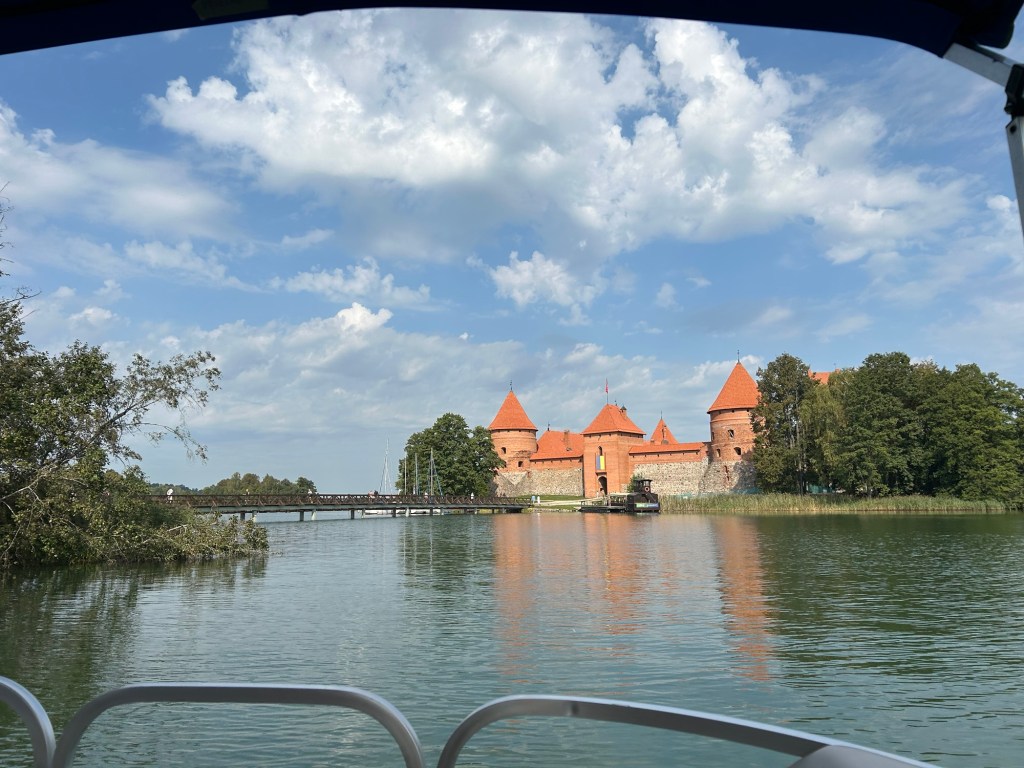
Our second destination was the town of Trakai. The area is known for its stunning castles and palaces. We began our visit with a boat ride from a dock on Lake Galvė, cruising along the waters.
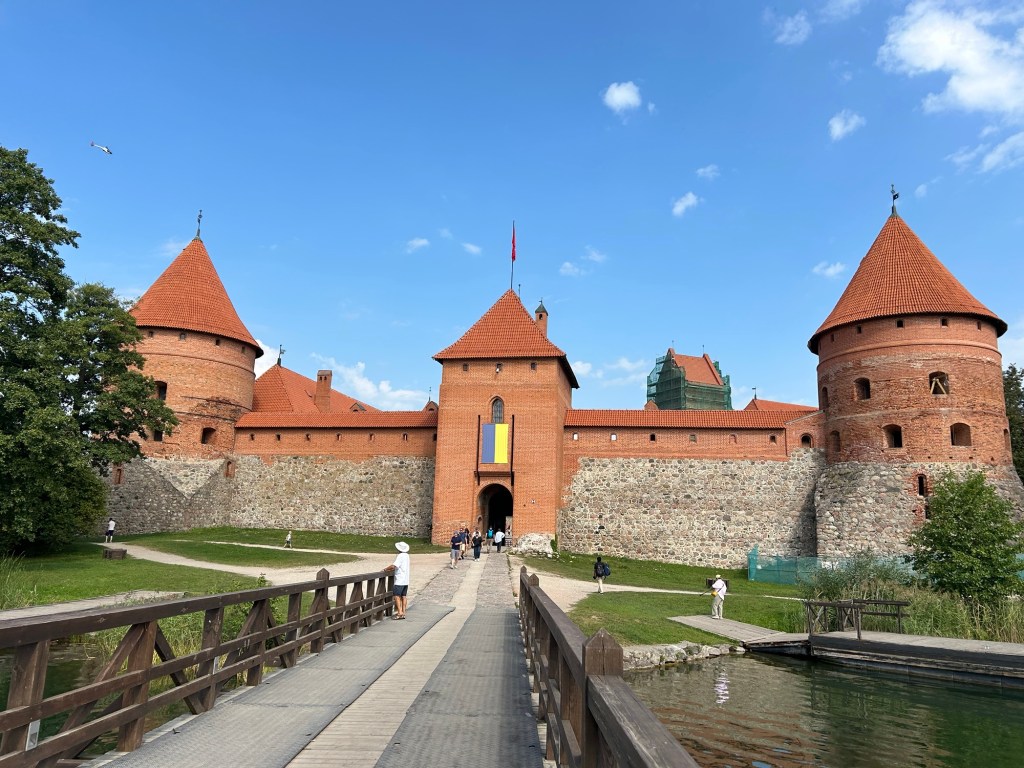
On an island in the lake stands the famous Trakai Island Castle, which now serves as a museum. This castle was originally built in the 14th century but was heavily damaged during various conflicts. It was restored and reopened to the public in 1962.

As we continued our tour on the water, we also admired the Užutrakis Manor, a stunning white mansion on the lakeshore. Built in the early 20th century by the wealthy banker and philanthropist Julius Janonis. Absolutely stunning, I wouldn’t mind having a house like that in the future!
After our boat tour, we disembarked at Trakai Island Castle and explored the interior, where we were able to appreciate its architecture up close.
Lunch!
A big part of traveling is discovering the diverse culinary cultures, and our stop for lunch was a great opportunity for this. We dined at a local restaurant, Blynų namai, where our guide recommended several traditional Lithuanian dishes.
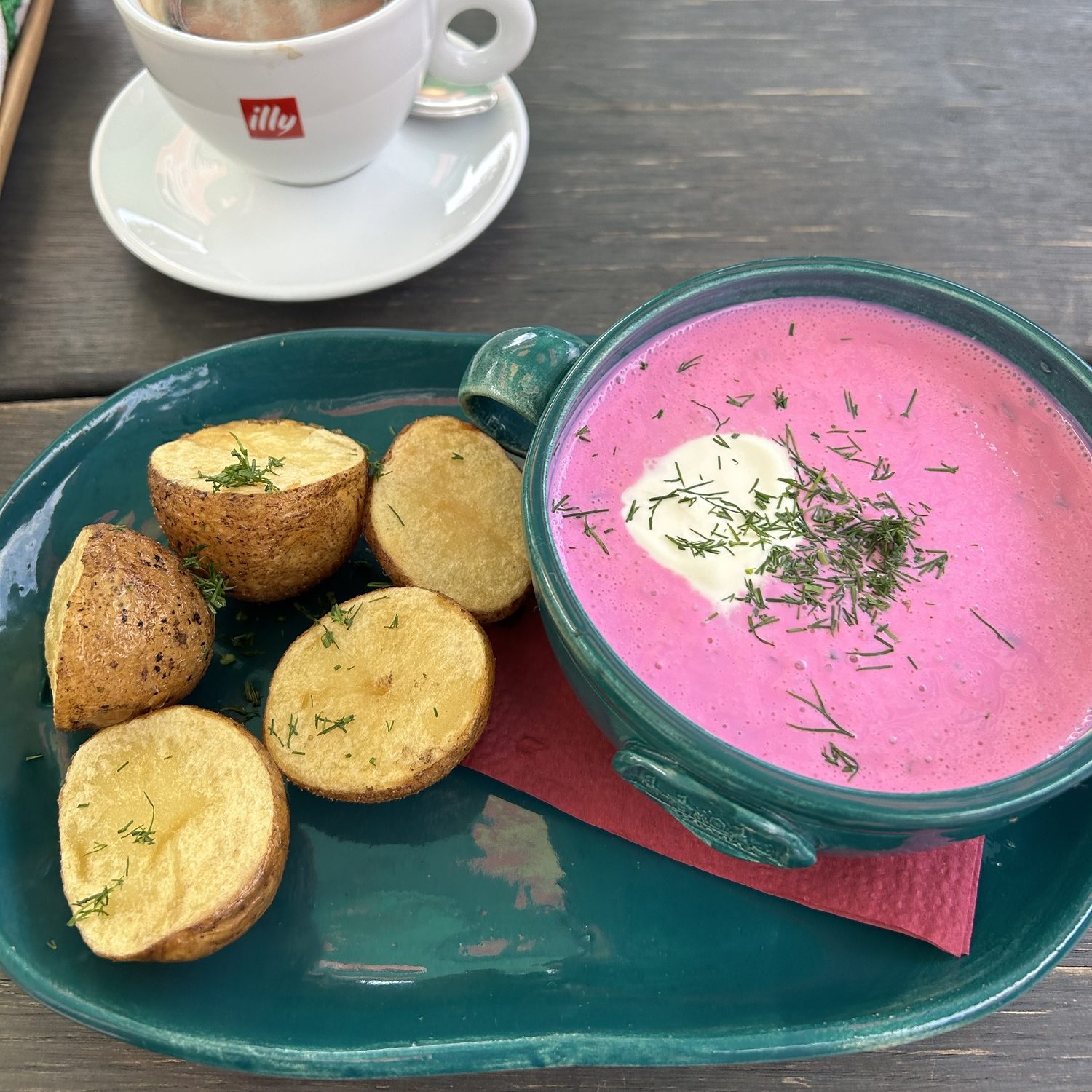
We started with cold beetroot soup (Šaltibarščiai), a vibrant pink dish made from fermented yogurt, cucumbers, dill, eggs, and beets. It’s served with hot boiled potatoes, which you mix into the soup. It was delicious, though slightly tangy.

Next was potato pancakes (Kugelis, the top plate), which are pretty much fried hash browns but filled with meat. These are often served with sour cream and are quite filling.
We also tried their potato dumplings (Cepelinai, the lower plate), which are stuffed with sausage. The potato exterior has a texture somewhat like rice pudding and is sticky, similar to mochi. Not my favortite, but cool to try!
It was all delicious, though a bit heavy due to the amount of potatoes. After enjoying our meal, we thanked our server with an “Ačiū” (pronounced like “Achu,” similar to the sound you make when you sneeze) and set off for the next place.
Third and Final Destination:
Our final exploration took us through Vilnius, the capital city rich with history. We started by walking along a remnant of the city wall and into the city. It seemed like every street corner had a church—a fact that might just be true given the amount of churches Vilnius has!
Crossing a river, we entered the old district of Uzupis, a quirky and independent neighborhood that declared itself a republic in 1997. It is one of the smallest republics in the world, and covers less than 1 sq km. A celebration of its Independence Day is held every April 1st with beer even being served from the fountain in the center! It’s actually really interesting, and I found a really cool article about it from a fellow traveler!

Next, we visited the Bell Tower Church and climbed to the top for a breathtaking panoramic view of Vilnius. Definitely worth it. Right next door, the University of Vilnius was preparing for a welcome event, which we got to walk through.

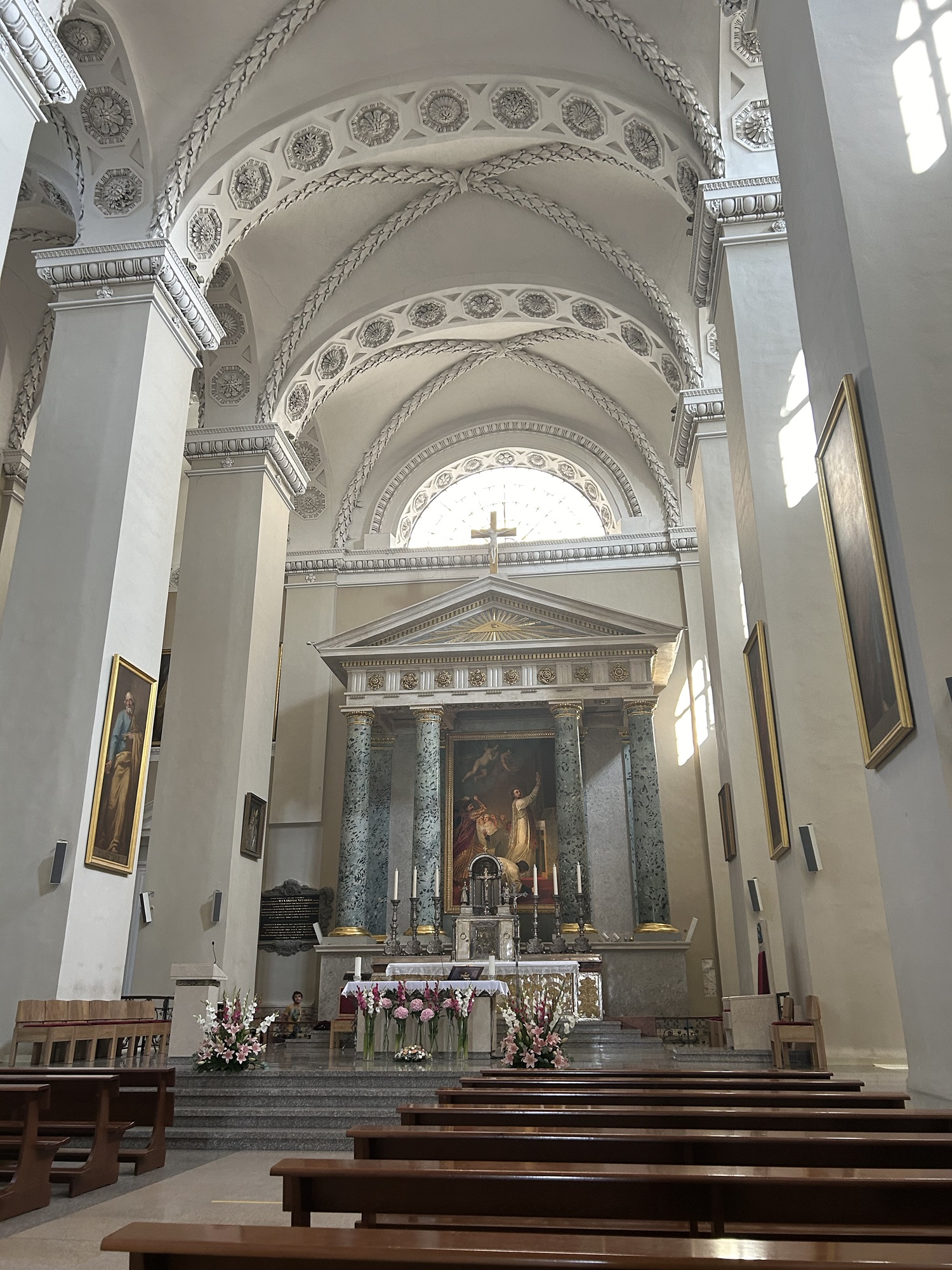
We then explored the Cathedral of Vilnius, where we learned that for a church to be officially designated as a cathedral, it must have a bishop. Lithuania has three cathedrals, and Vilnius is home to one of them.
That evening, we dined at Lo Kys, a restaurant known for its wild game and other meats. The meal was fantastic, and the restaurant’s decor was stunning. As we walked back to the hotel, the streets were buzzing with activity inclusing many students ready to start the next year.
The taste of Lithuania we got was brief but nonetheless stunning. On to the next destination: Sweden.


 Around the World with Abigail
Leave a Reply!