
One of the most intense solo trips to date was my recent visit to Egypt this past February (2024), my first time in Africa! The plan was so spontaneous and last minute! I had a month long school break and decided to do a solo adventure to somewhere I had never been.
While browsing travel websites for destination ideas, such as HolidayPirates, I noticed many all-inclusive packages, including a few in Egypt. All-inclusive vacations often have itineraries that can make you feel confined to the resort. However, they can be perfect if you desire minimal planning on your part and want to just relax and enjoy. I was pleased to find a package that included food and opportunity for independent exploration.
Another important consideration for me was that traveling solo in Egypt as a female can come with a bit of a risk. This is primarily due to cultural customs and dress attire and appearance. Bringing unwanted attention if by myself could be a bit uncomfortable. I began researching group travel companies. One of the popular options is Intrepid. While searching, I stumbled upon an affordable 8-day trip to Egypt with G Adventures. This trip seemed perfect—it was less expensive and offered many activities and aligned with my school break!
It is always important to research vaccination policies of other countries. African countries require various vaccines and medications, such as those for Hepatitis A and Malaria, which I always associate with travel to this continent. Fortunately, these are not necessary before traveling to Egypt, which definitely helped in my decision-making.
The itinerary included visiting Cairo, Aswan, and Luxor for up to 14 people. A few excursions included dinner with a local family, a journey down the Nile on a felucca, exploring ancient temples and monuments, and, of course, seeing the pyramids and Sphinx. Excited by the array of activities, I booked the trip! Just wrapping up my Christmas vacation in Iceland and Portugal, why not keep the adventures rolling?
In preparing for the trip, I researched the country’s cultural norms and guidelines for women traveling to Egypt. Critical rules are to dress modestly by always covering shoulders and legs and avoiding being alone. This posed a challenge when I realized my flights were booked a day early, and I wouldn’t know anyone upon my arrival.
Day 1-Travel Day
What excitement! To beat the typical delays of the train system, I left Gießen early for Frankfurt, only to arrive with far too much time before my flight. It seems you can never win with DB (the German train system)! The four-hour trip to Cairo went by, but I did not have a pre scheduled form of transportation awaiting me. I was a bit uncomfortable waiting for a car due to the stares I felt from those around me. Thankfully, Uber is an available and affordable service in Cairo, unlike many other countries I’ve visited. I recommend researching your shuttle services in advance and plan accordingly. Your options could include hotel shuttles and taxis keeping safety in mind.
Arriving at the Cosmopolitan Hotel in Cairo, it appeared to be an older hotel, but very elegant. I met someone from the company who assisted with check-in. Arriving a day early to an unknown country with nothing planned for the following free day and not knowing a single person made me feel a bit anxious. Later, that evening I met 2 other travel group members. Sourabh, who lives in New York, and later Raf, who’s from Bangladesh, became my first companions in this new adventure. I felt a big sense of relief having met some travel companions.
Day 2-Cairo, Pre-Official Begin and Group Meet-Up
While at breakfast with Raf and Sourabh, we booked a tour around the city for the day. We walked to a nearby park, crossing a bridge over the Nile to bide the time before the start. The heat and dust were palpable, typical of a desert landscape, and the dust unmistakably obstructed the views. My first impression of Cairo was that it felt dirty and congested, with streets full of cars and trash strewn about. However, regarding safety as a woman, I felt reasonably secure. I’m not sure I would have felt this way had I not been accompanied by my two new male friends. The presence of many tourists in the city was also reassuring, as I wasn’t the only foreigner around.
As we got picked up by our private tour bus, we learned about the rich history of Egypt. Ancient Egypt, starting around 3100 BC with King Menes’ unification of Upper and Lower Egypt, is renowned for its pyramids and pharaohs. Modern Egypt emerged in the early 19th century under Muhammad Ali Pasha, who is credited with changing it into how we know it today. After a revolution in 1952 that ended the monarchy, Egypt became a republic marking a new chapter in its long history.
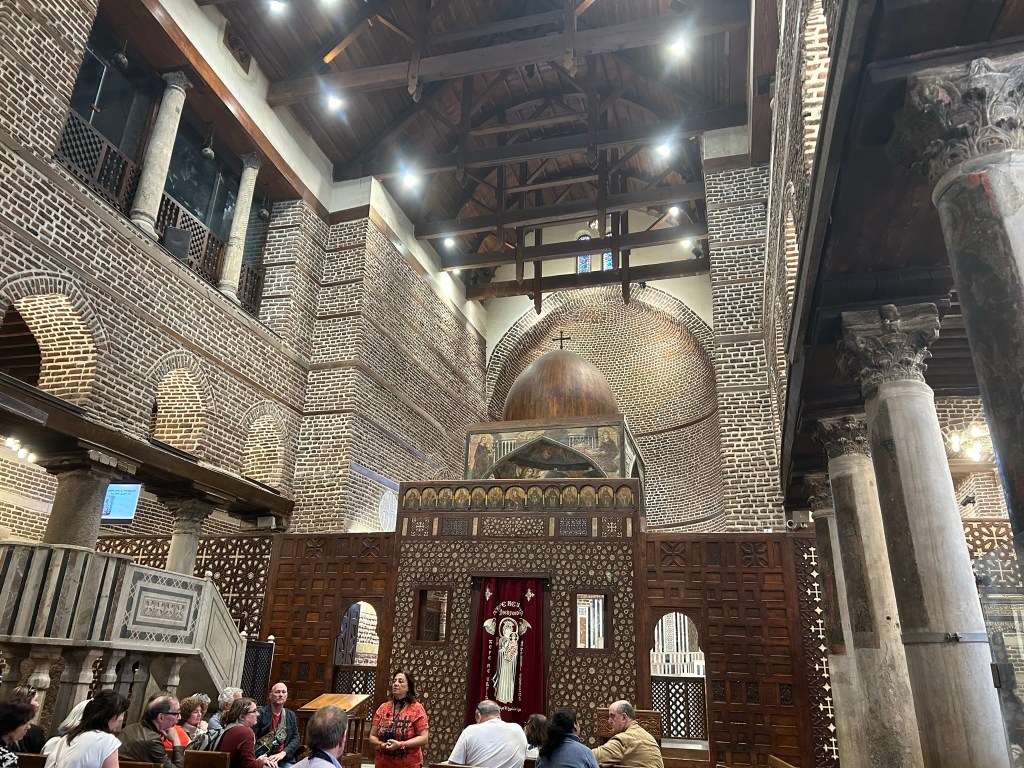
We visited various religious sites, starting in Old Cairo, where history and religion converge. Our first stop was the Hanging Church. The artwork here was distinctly Egyptian, a fascinating contrast to European churches. The mediums of Egyptian painting, bricks and wood felt so genuine and deep in its meaning. The roof was constructed to look like the base of Noahs Ark. I enjoyed the contrast of these artistic structures from the European religious buildings I’ve been around. We then walked to the Ben Ezra Synagogue, which is not in use today due to the dwindling Jewish population in Egypt. There are only about 100 Jews left, mainly there to maintain these historical buildings.
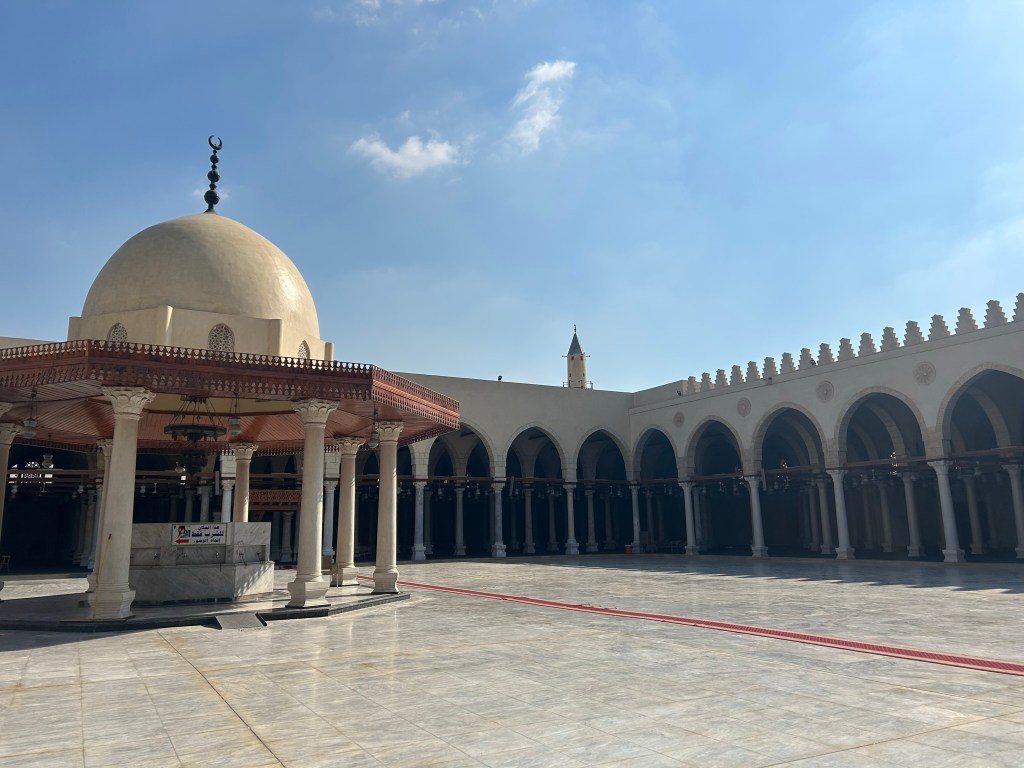
Next, we visited the Amr Ibn al’As mosque, the first mosque built in Egypt and Africa. We had to remove our shoes to enter, and I donned the headscarf I brought. Inside, it was very open, with a few chairs towards the back, where we sat and learned about Islam. Prayers start at 5 AM and occur another four times throughout the day. When it’s time for prayer, the Adhan is broadcast loudly, guiding Muslims to pray in the direction of the Kaaba in Mecca, Saudi Arabia. The Adhan, sung by muezzins (similar to a priest of a church) at countless mosques across Egypt, is a sound that echoes and is impossible to ignore. It’s somewhat akin to the church bells I hear in Germany, but far more audible. Imagine my startled morning awakening by this call to prayer at 5am this morning with no clue what it was! Not knowing much about Islam before this trip, experiencing the Adhan firsthand and learning about the religion has been a fascinating part of my journey.
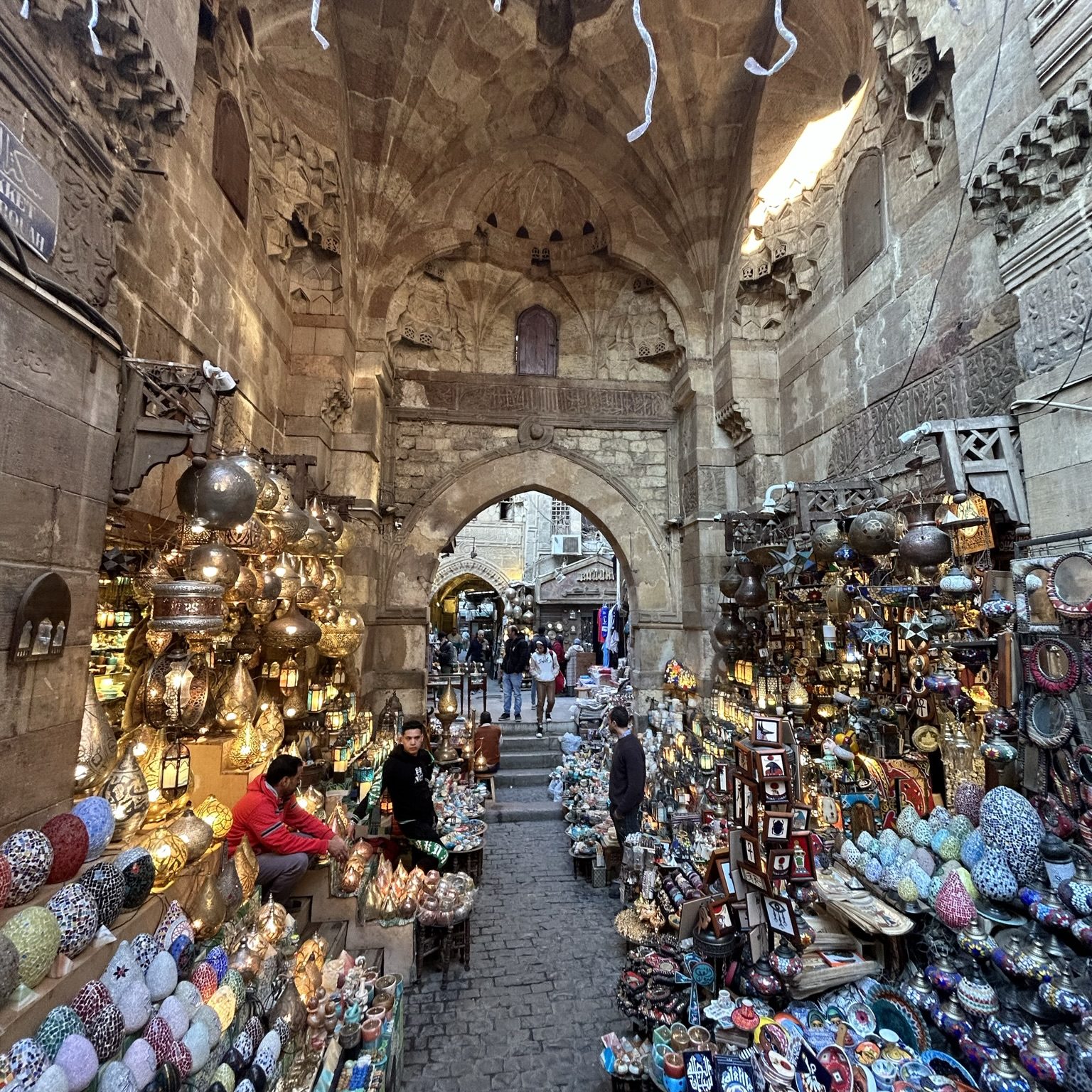
Afterward, we visited a papyrus institute and a spice shop. Papyrus, a reed plant abundant along the Nile River, was an indispensable resource in ancient Egypt and is considered the world’s earliest paper-like writing material. Egypt has an array of locally grown spices including Cumin, Coriander and Anis. Funny to witness in both of these stores was Raf’s bargaining skills which later continued throughout the whole 8 day trip! Lastly, we toured the Khan El-Khalili Market, a bustling and famous bazaar in Cairo. With so many people and too many tourist shops, we decided to leave early.
Back at the hotel, we met our leading tour guide from G Adventures, Angie, who was born and raised in Egypt. Also having arrived was my new roommate Sharon, a wonderful lady from the UK. I was lucky to have been paired with her. Although you can opt for a single room for an additional fee, I didn’t feel the need to do so as I enjoy meeting new people while traveling. The five of us then walked to a small restaurant down the alley. Famished from not having eaten since breakfast, we quickly devoured the bread, dips, and sausage, while getting to know each other. So far, it was a great start to my travels.
Day 3-Cairo, the Pyramids, and National Museum
Our day began with meeting the last two people in our group, Phil and Sylvia, who are also from the UK. We learned we would be a very small but compatible group of seven! Me, Angie, Sylvia, Sharon, Phil, Raf and Sourabh.
Pyramids
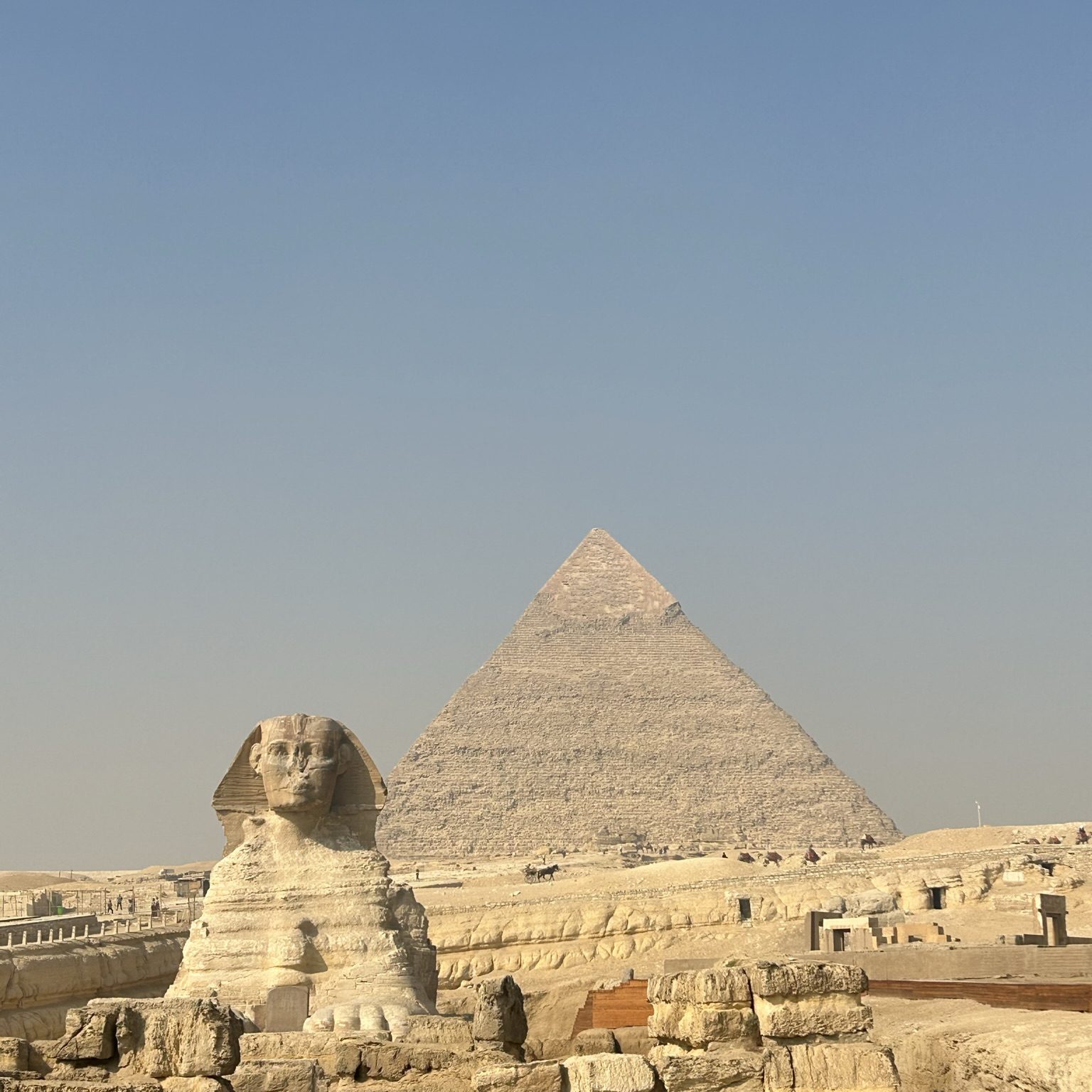
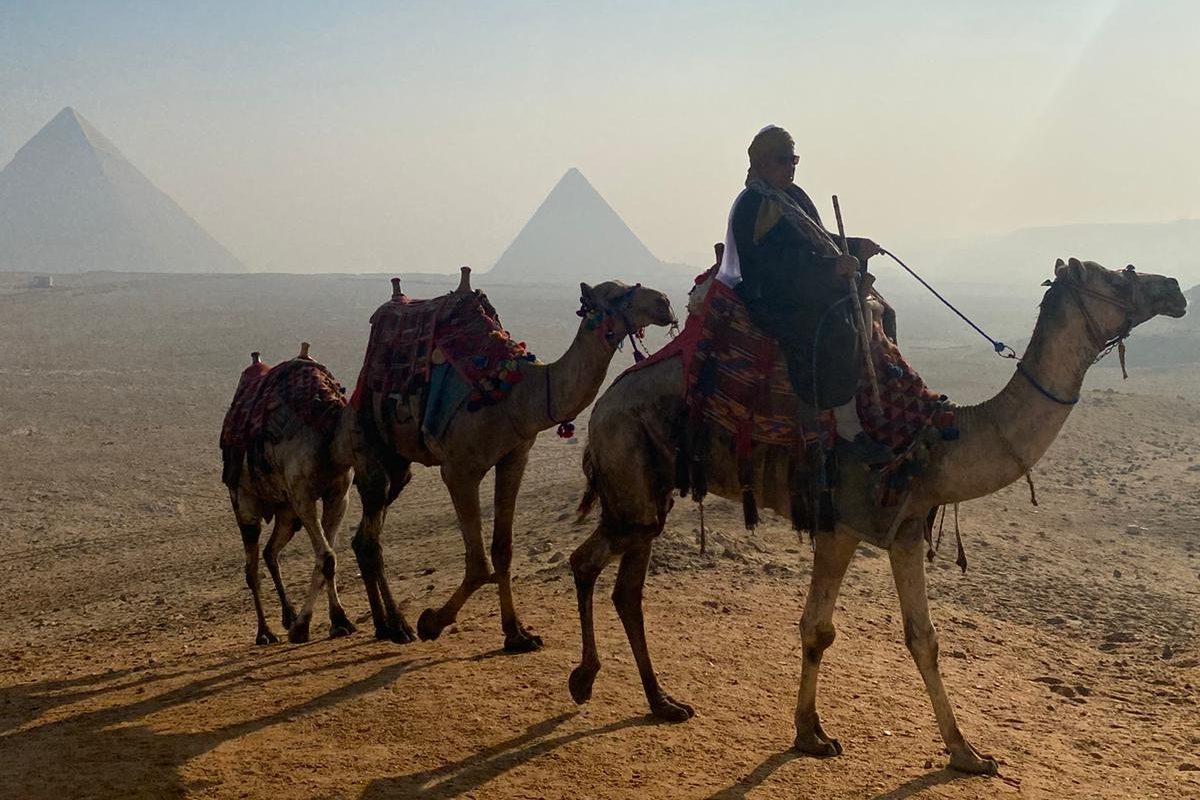
Starting off strong, we drove to Giza to visit the pyramids and the Sphinx. Leaving so early was well worth it when we arrived to find almost no other tourists! We drove a bit farther to get a good view of all three pyramids. At first, the dust almost completely blocked our view, but as the sun rose, our sight became clearer. It was amazing to see camels everywhere, happily munching on the grass brought for them. I couldn’t believe I was actually seeing one of the seven wonders of the world in person. There are three main pyramids, but you can see some unfinished ones farther away. It is a very surreal scenery.
There was an option to go inside the smaller pyramid with a ticket purchase. However, it was a simple walk down a small corridor that lead to an empty tomb chamber. The heat and the crowds made for a sweaty and uncomfortable journey. It was an expense you can forsake without regret, in my opinion.
Walking up to the pyramids, I was awed by the size of the stone blocks, each larger than me! I was also surprised to see that the actual triangular shape of the pyramid is not as symmetrical as it appears from afar. Some stones are larger than others, both in width and height, so they had to puzzle it all together to get the shape we see now. Imagining how they built such giant pyramids without modern technology is truly baffling, and sombering, as it was the slaves from back in the day who did this grueling labor.
We then drove to the Sphinx, located right in front of the pyramids. Sculpted from a giant stone that was originally blocking the view of the pyramids, the pharaoh at the time disliked the obstruction and had it carved into the body of a lion with his face. Now, it sits in front of the pyramids, “guarding” them. I was surprised to find it smaller than I had imagined, especially the head, and it was a bit challenging to get a clear view of both the Sphinx and the pyramids behind it.
Continuing
Our next destination, the Egyptian Museum in Cairo, was an incredible array of statues, coffins, beads, papyrus paintings, and artifacts from ancient, middle, and modern Egypt. There is a room that holds King Tutankhamun’s 22.5 lb. (10.23kg) gold funerary mask and all of his jewelry. We even saw mummies with completely intact hair! A bit eerie in my opinion. Personally, I loved viewing all the papyrus paintings of the gods and the accompanying hieroglyphs.
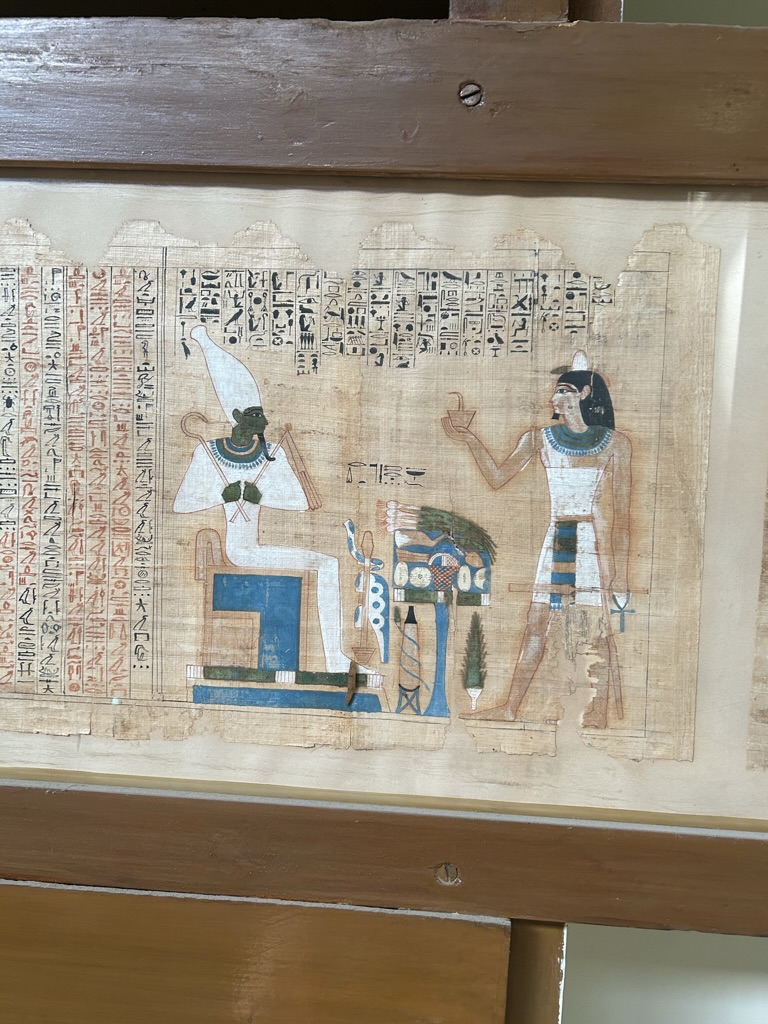
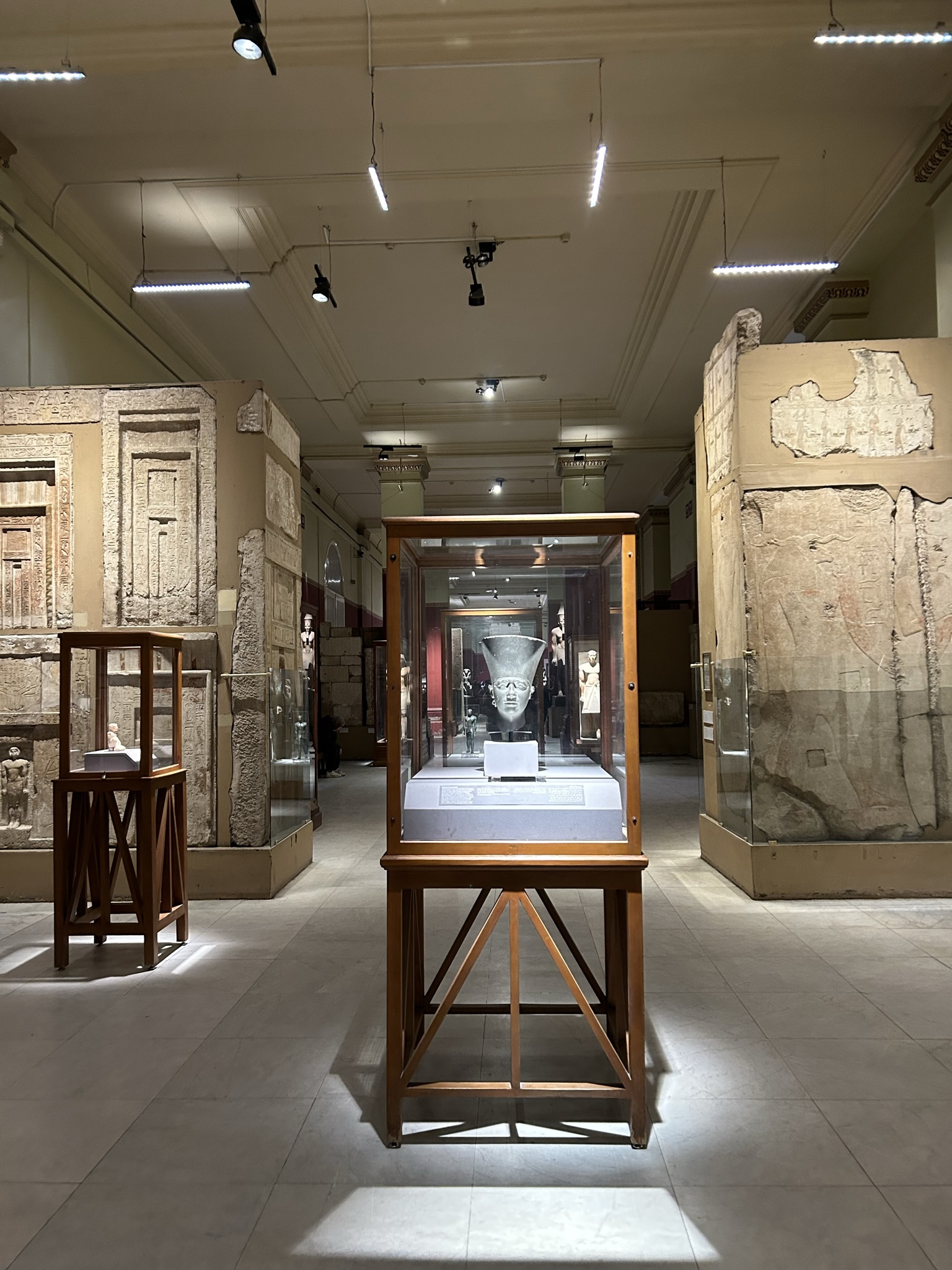
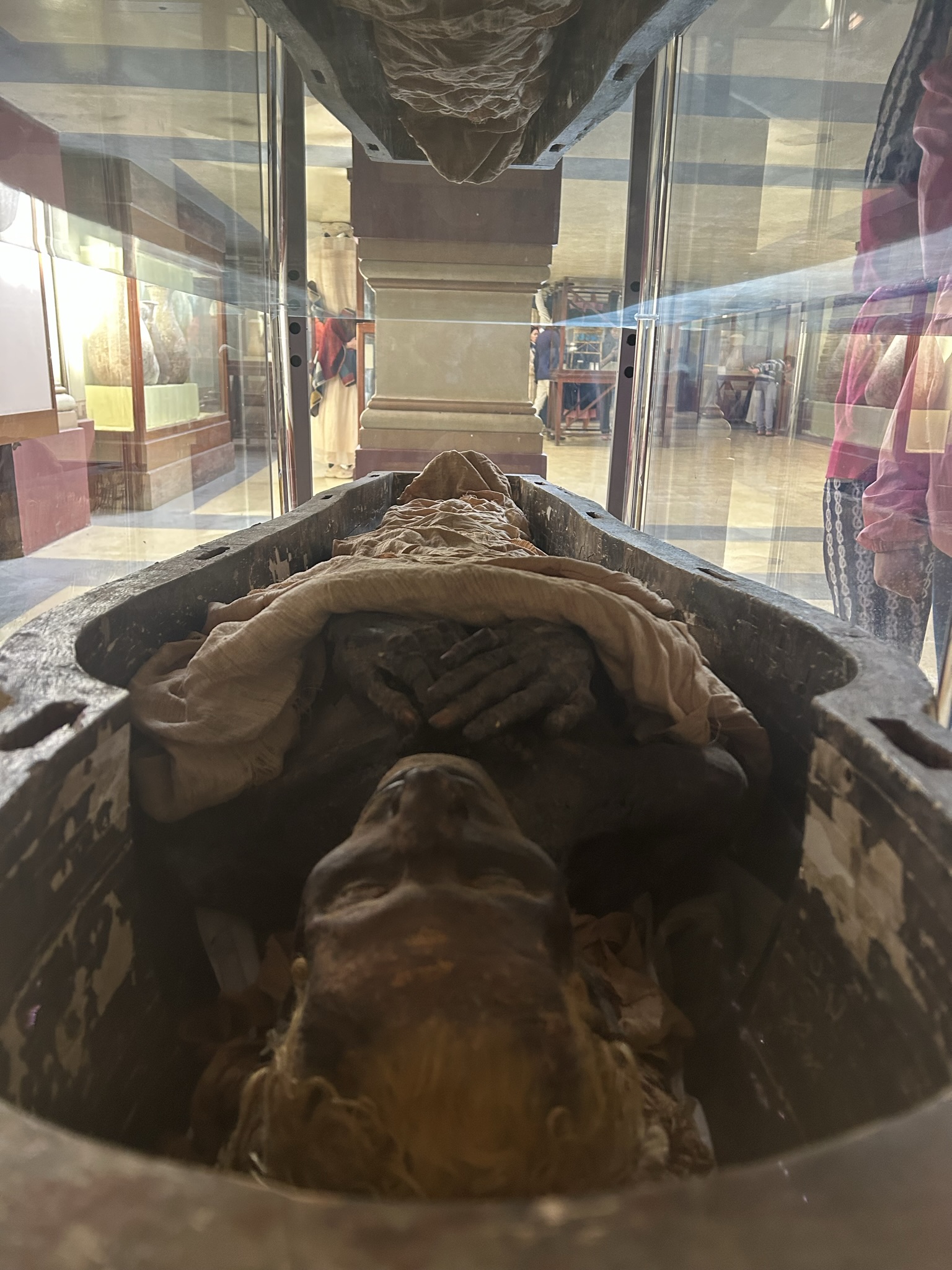
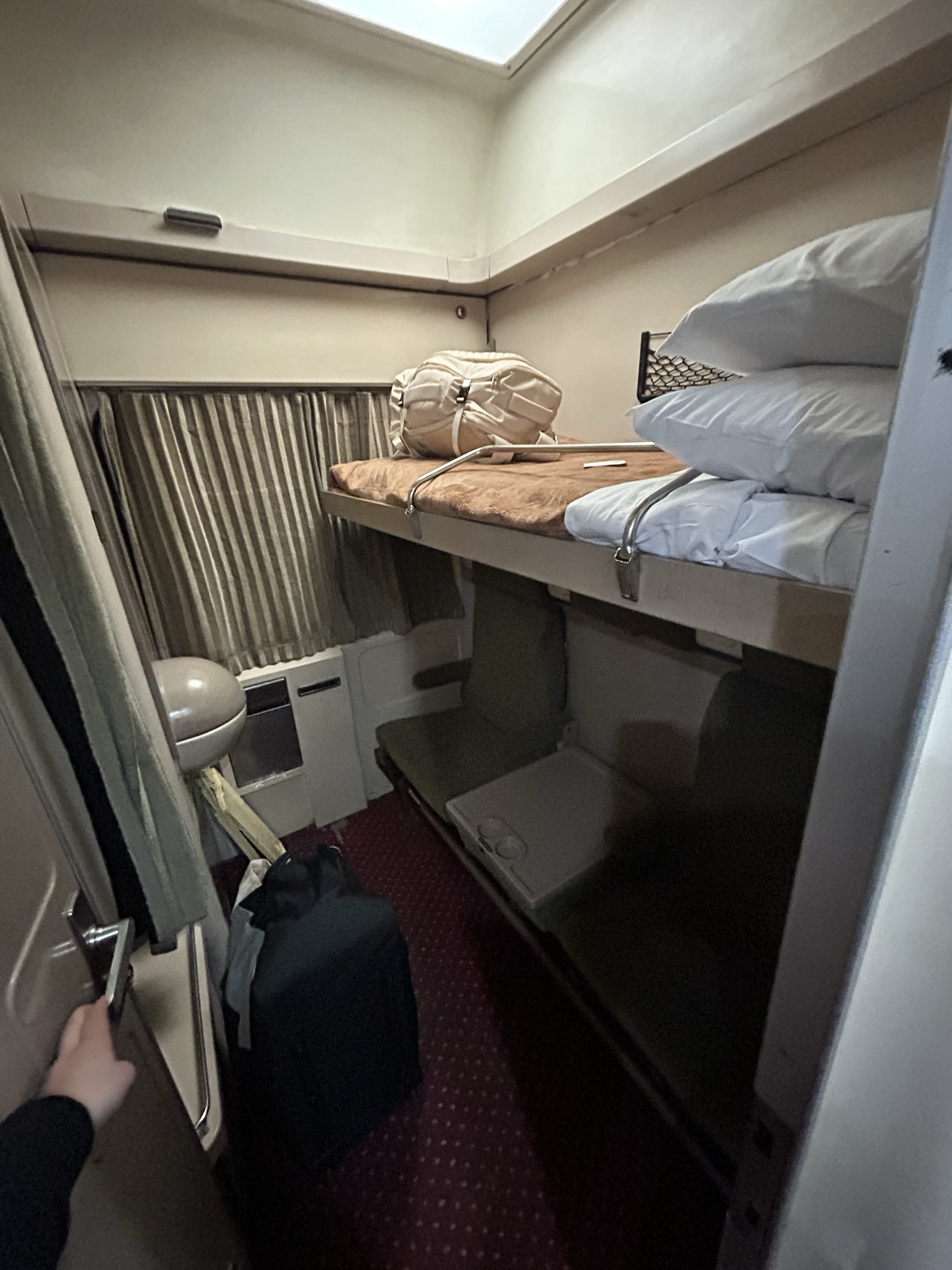
Ending our day in Egypt, we boarded a train for an overnight trip to Aswan. I felt excited anticipating my first overnight train trip. After settling in our assigned very small room, Sharon and I joined the others to explore the train before dinner. The bathrooms were at the end of our train car as well as a small bar and smoking section. Dinner was later delivered to us back at our room.
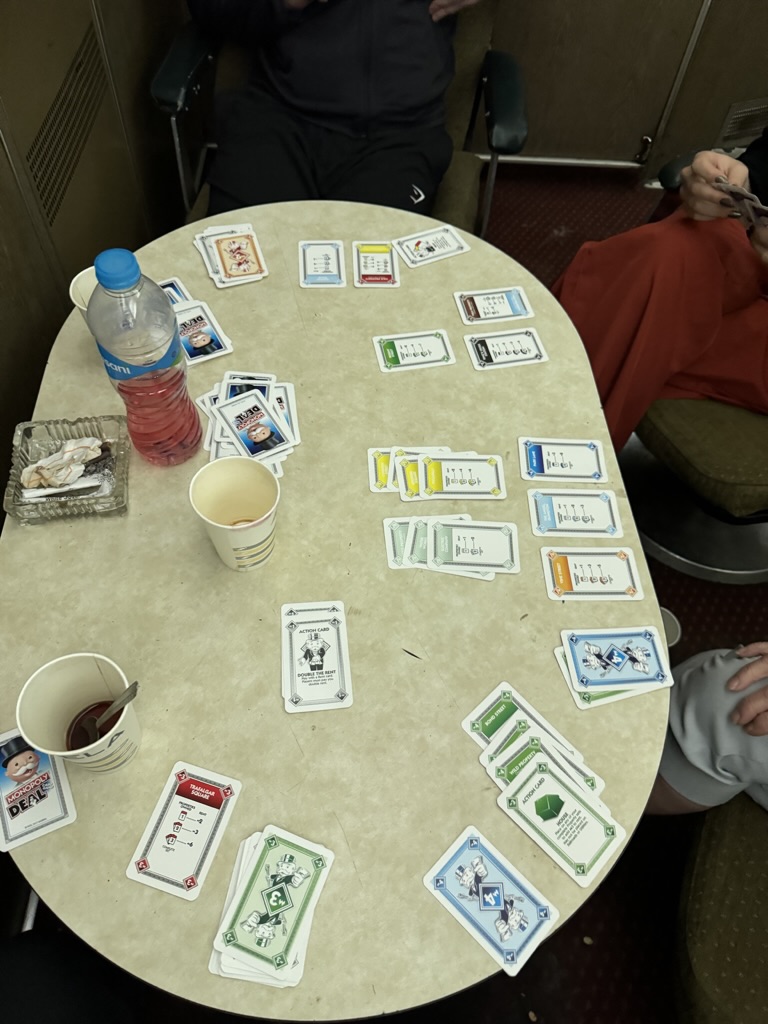
Later in the evening, our group met and had tea and played card monopoly brought by Phil in our group. It was our game for the trip. I was so happy to be with other game lovers. Besides all of us smelling like cigarettes by the end of the evening it was fun. The rocking of the train then seemed to sway us right to sleep.
Day 4-Aswan, Philae Temple and a Local Dinner
After an 8 AM train wake-up call, we enjoyed breakfast watching the sunrise during our last hour towards Aswan. I found it to be a very pleasant and practical form of transportation, and wished that we would have done it again later in the trip. It is inexpensive, having a bed, dinner, and breakfast, and is far better than sitting in a car for hours. If interested, Abela is the company through which my tour booked it.
Philae Temple
Our first destination was the Philae Temple on an island on Lake Nasser. The temple was relocated in the 1960s due to the construction of the Aswan High Dam, which aimed to control flooding in Lower Egypt. There was evidence of water damage in the discoloration on some of the walls due it’s 15 year immersion under water. While some temples were successfully relocated, others, unfortunately, remained submerged. What an adventure it would be to dive to these for exploration. Unfortunately, recreational diving is not permitted and would be too dangerous due to the presence of Nubian crocodiles.
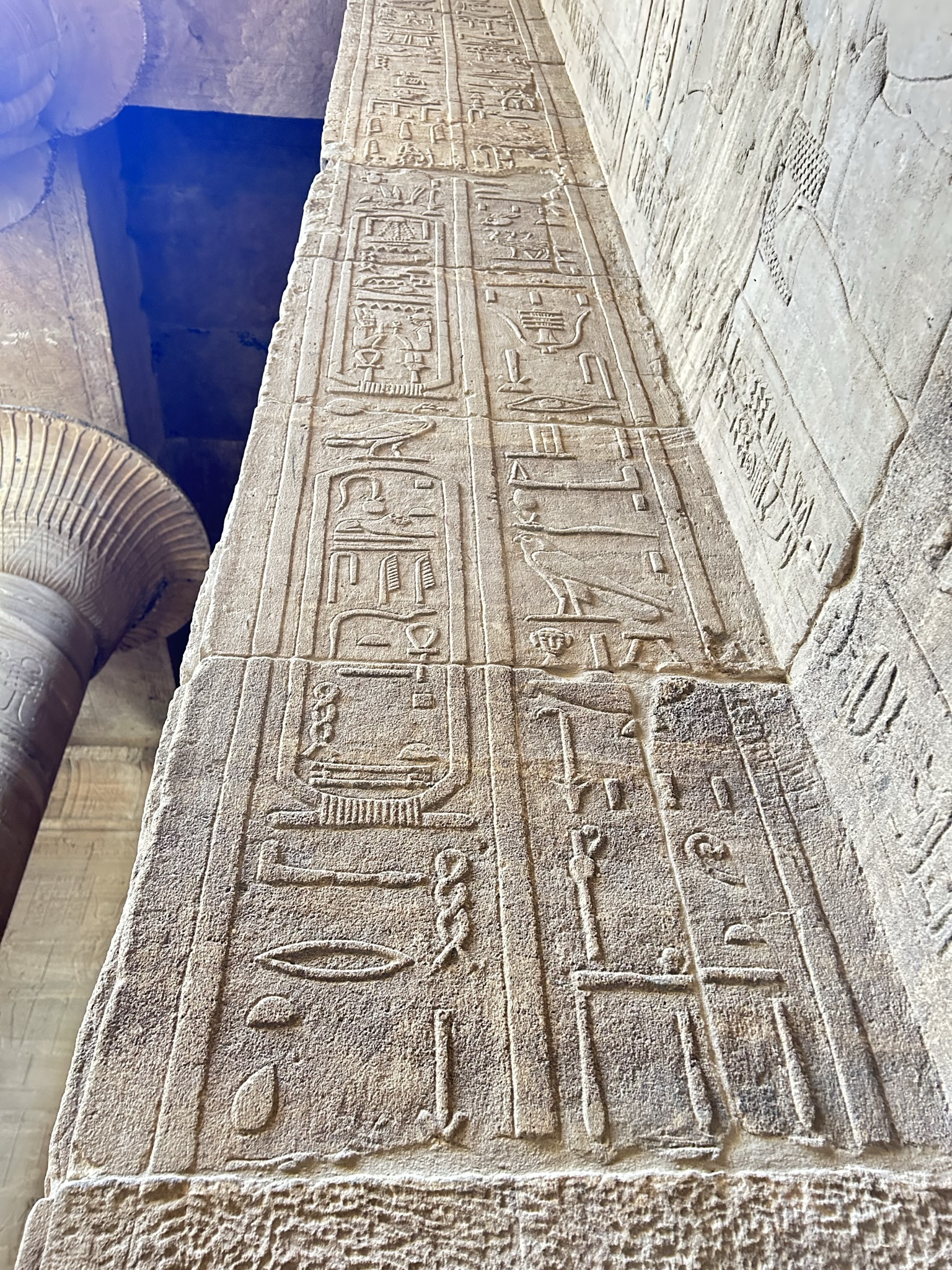
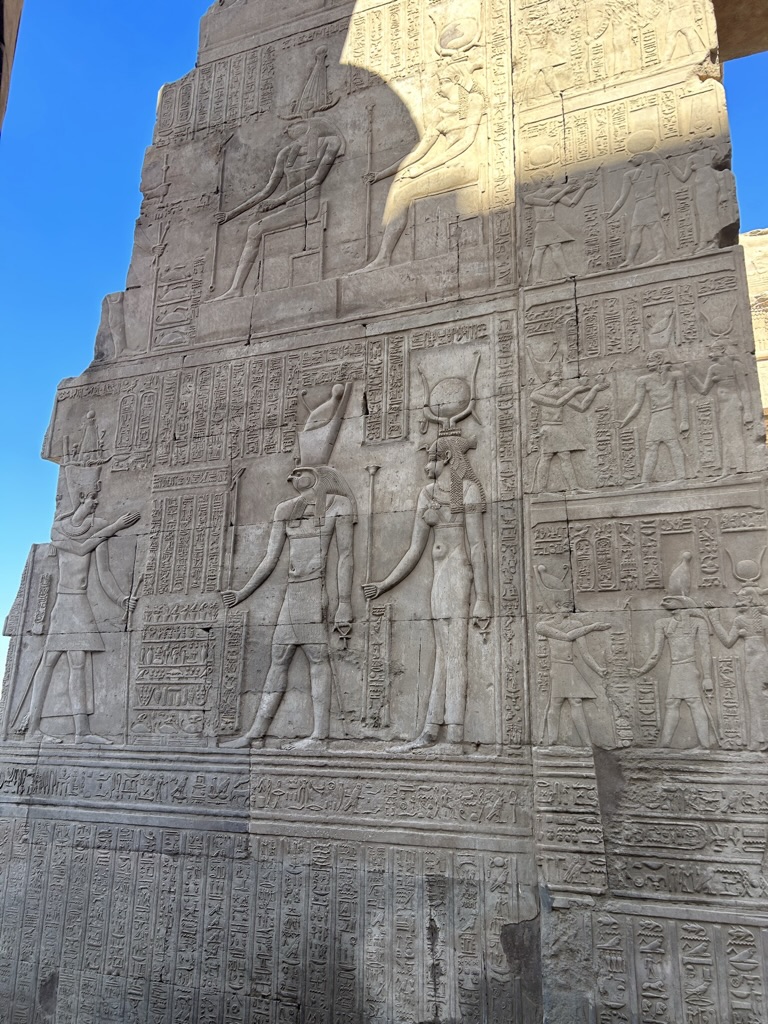
Philae Temple comprises several smaller temples adorned with intricate wall carvings depicting mythological scenes such as Isis resurrecting her husband Osiris, giving birth to Horus, and performing rituals like mummification. The temple’s setting amidst the blue waters of the Nile adds to its mesmerizing beauty. If you’re ever in Egypt, Philae Temple is a definite must-visit and probably one of my favorite parts of the trip!
Continuing Onward
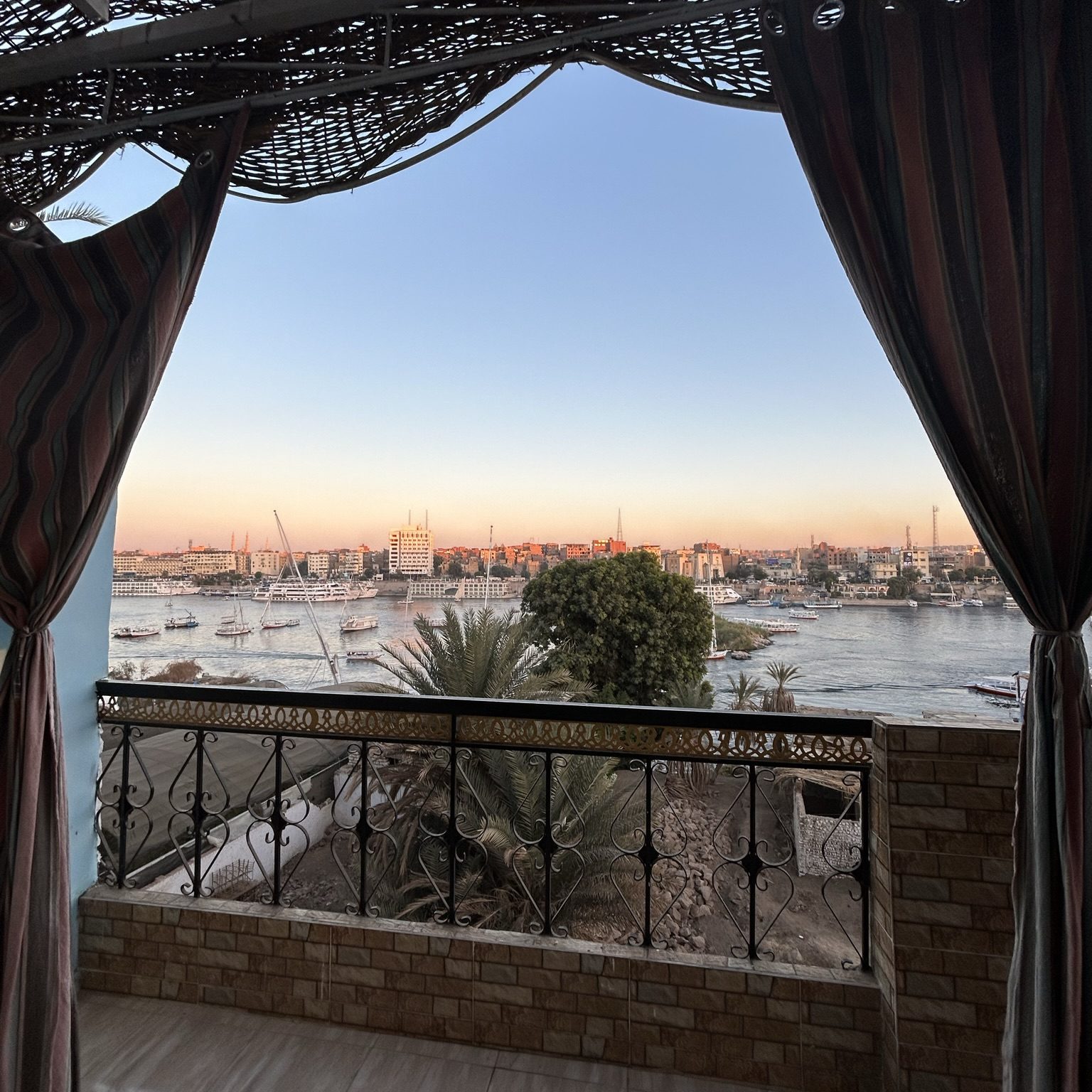
Returning to land, we arrived at our new hotel, the Obelisk, a luxurious upgrade from our previous accommodations. Located right on the Nile, the view was breathtaking, and having a pool was a definite bonus—I spent my free hour there, though even with sunscreen, I managed to get a little sunburned in just 45 minutes!
Next on our itinerary was a visit to a spice store where we enjoyed shawarmas for lunch, and I bought chicken spices to bring back home. Exploring the market nearby was next on our agenda, and while I was excited, the pushy vendors trying to make a sale discouraged us from continuing. The stares I received also made me very uncomfortable. The smaller the town and the fewer the tourists, the more uneasy I felt. One encounter, when a man asked me how many camels I was worth, was particularly unsettling.
At our hotel along the water, Sylvia, Sourabh, and I enjoyed a glass of wine on the terrace—my group of wine buddies for the trip! Finding Egyptian wine was a treat, as alcohol is not commonly available due to local religious practices. We tended to keep to our tour group as we never actually saw many other guests.
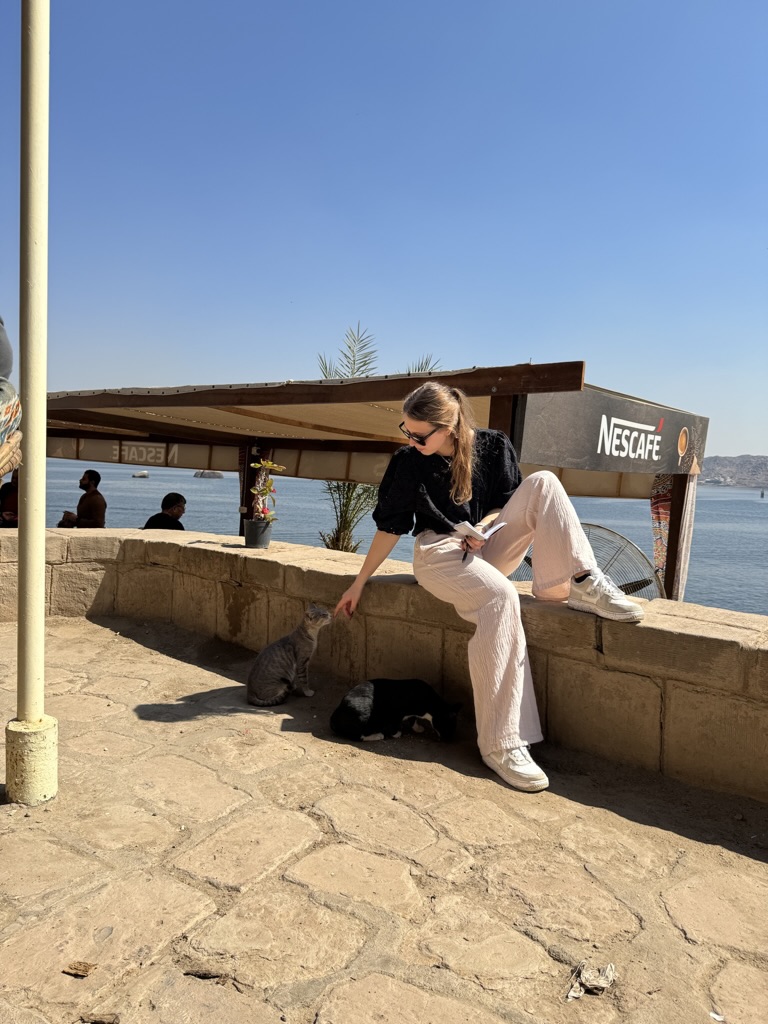
Later in the evening, we boarded a motorboat from our hotel’s dock to dine at a local home on an island village. The sunset view from the small family home was spectacular. We were greeted with hibiscus tea, followed by a delicious spread including lentil soup, baba ghanoush, okra dip, potatoes, and chicken. It was surreal to enjoy the warmth and great food in this setting, and watching the cats playfully fight over leftovers added a fun touch at the end. Being a guest of local households through this program made the experience even more meaningful. We returned to our hotel after expressing our gratitude with a ‘Shukran’ (thank you).
Day 5-Aswan and Abu Simbel
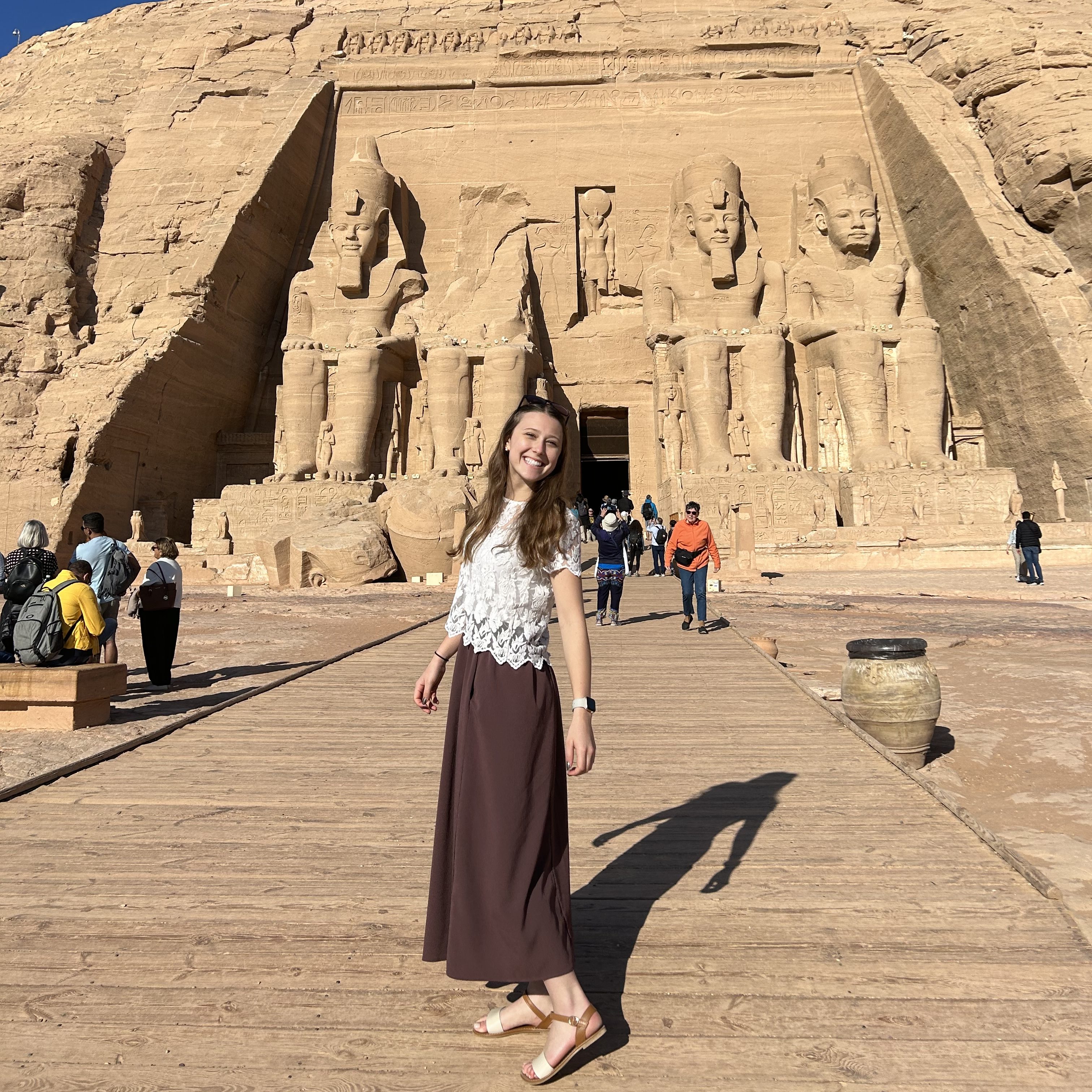
At 4:30 AM, we groggily gathered in the lobby to embark on an early three-hour journey to Abu Simbel, aiming to avoid both the crowds and intense heat. Upon arrival, we walked a short distance around a hill to the two temples: the grand temple of Ramses II and the temple dedicated to his beloved wife Nefertari, famously known as the ‘Temple of Hathor’. These temples were among the first to be relocated to save them from flooding after the construction of the Aswan High Dam; both spent about three years underwater.
The colossal statues of Pharaoh Ramses II at the entrance were imposing, and the intricate carvings inside were remarkably detailed. It was undoubtedly worthwhile, though this singular journey primarily consumed the day. The amount of driving was necessary to visit all of these sights, but it was starting to feel overwhelming.
Day 6: Travel to Luxor
After breakfast, we boarded a felucca for a peaceful journey up the river. A felucca is a traditional wooden sailing boat mainly used in Egypt. Sitting on pillows made it a comfortable and serene ride, and after so much nonstop activity, the draw to take a nap was enticing! We docked at a village farm along the riverbed, surrounded by water buffalos, cows, donkeys, mango trees, and cabbage fields. Some local children approached us on animals and asked if we wanted to pay for a ride. It was disheartening to witness their rough treatment of the animals. Raf even tried to intervene, but Angie advised us not to interfere, explaining that such practices were common here, where animals are often seen as tools. It’s their way of life, as they’ve seen no different.
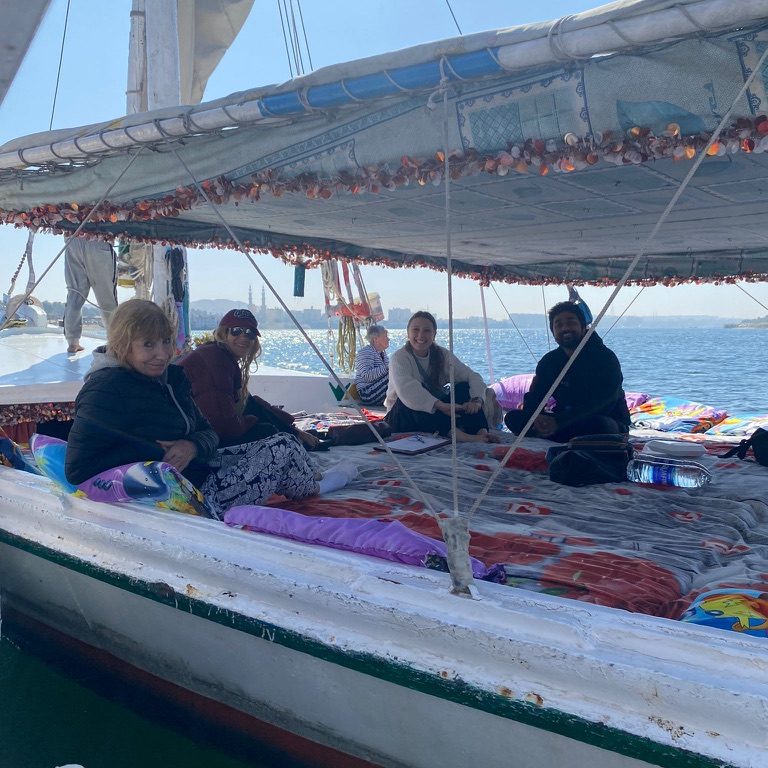
Afterward, Sylvia, Sourabh, and I walked along the bank, dipping our feet in the Nile—I wanted to be able to say I’d been in the Nile! As we continued our sail, we enjoyed another meal of chicken and baba ganoush. While the food was delicious, eating the same meal repeatedly started to wear on me. Traveling here as a vegetarian wouldn’t be impossible, but it would be challenging given how much they love their meat. I don’t think I ate much chicken for a while after this trip!
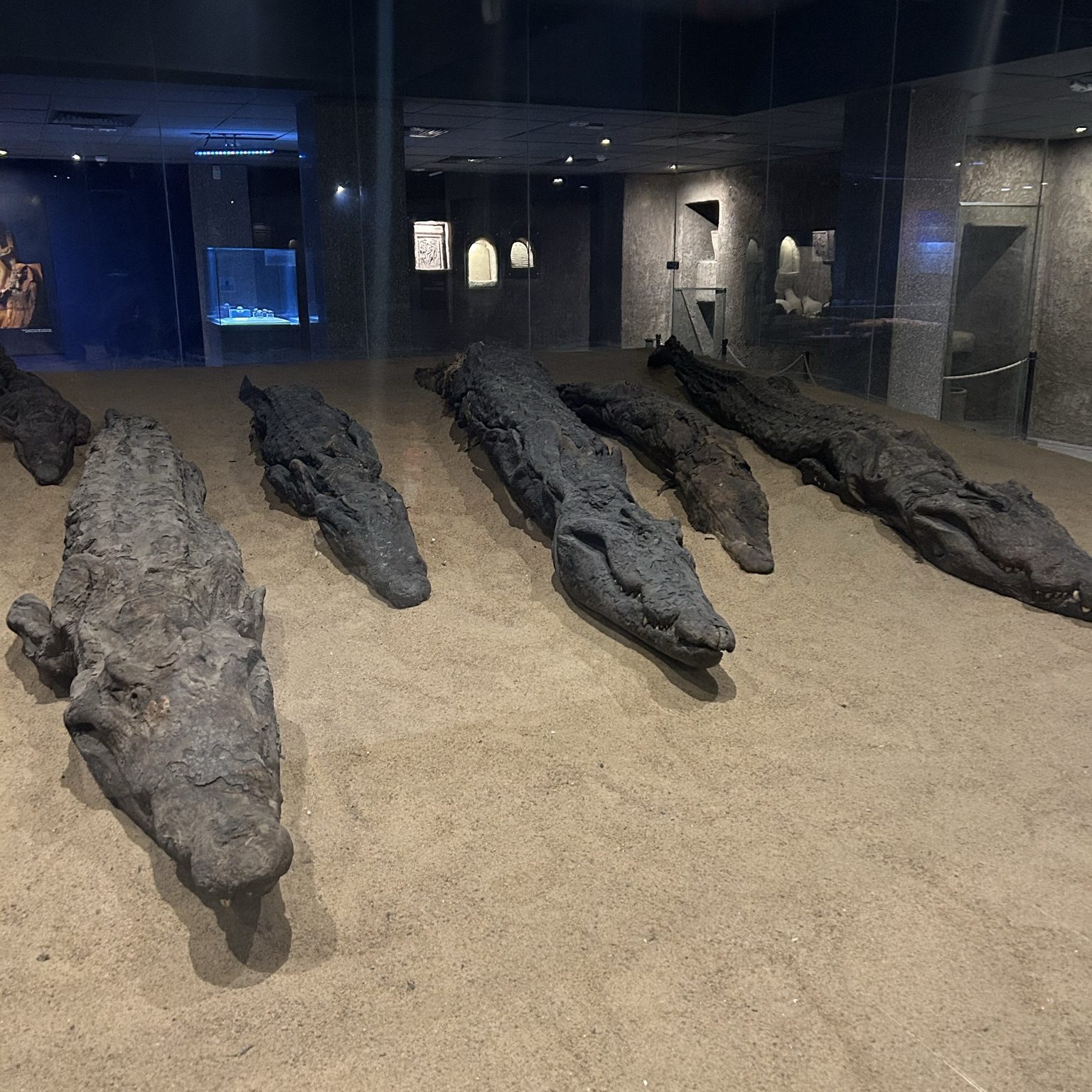
We then boarded a shuttle for a four-hour journey to our next destination, stopping along the way at Kom Ombo Temple, dedicated to the crocodile god Sobek. The temple’s paintings still retained faint traces of the vibrant colors they used in the past. At this site was also a building containing mummified crocodiles, remarkably well-preserved despite their shriveled appearance. Incredible to see.
During a stop at a fruit stand, an uncomfortable incident occurred when locals made comments that prompted Angie to hand me her scarf to cover my shoulders, which were already mostly covered. As a woman, this experience was unsettling. The men’s disrespectful behavior made me feel exposed and vulnerable, underscoring the cultural differences and attitudes towards women in Egypt. It was disheartening and frustrating, leaving me feeling powerless and longing for the comfort and security of home. I felt a wave of relief when we returned to the car and continued our journey, grateful to leave this upsetting moment behind. As mentioned earlier, smaller towns like this one can be challenging for tourists.
We also had to stop at a small pharmacy for Sharon to get a vaccination, as she had been feeling unwell since morning, and the journey was not helping. We weren’t sure what was causing her illness, but it had gotten to the point where she couldn’t eat. Finally, we arrived in Luxor, concluding our most eventful day of travel. We were all exhausted beyond words. I was grateful to finally be in a hotel bed that felt safe and comfortable.
Day 7: Luxor and the Valley of the Kings
Another early morning, we started with a visit to the Valley of the Kings, surrounded by hills hiding the entrances to these ancient tombs. Driving up to the main entrances on golf carts made me wonder how archaeologists ever discovered them in the first place.
Our tickets included tours of three tombs, and we opted to upgrade to see King Tut’s Tomb as well. Our first stop was King Ramses IV’s Tomb, where we descended a long corridor leading to a chamber room containing vividly colored paintings. These underground tombs could preserve artwork from sun and wind erosion, although sadly, they were all empty due to ancient grave robbers; some parts were even defaced. The others are built in a very similar fashion.
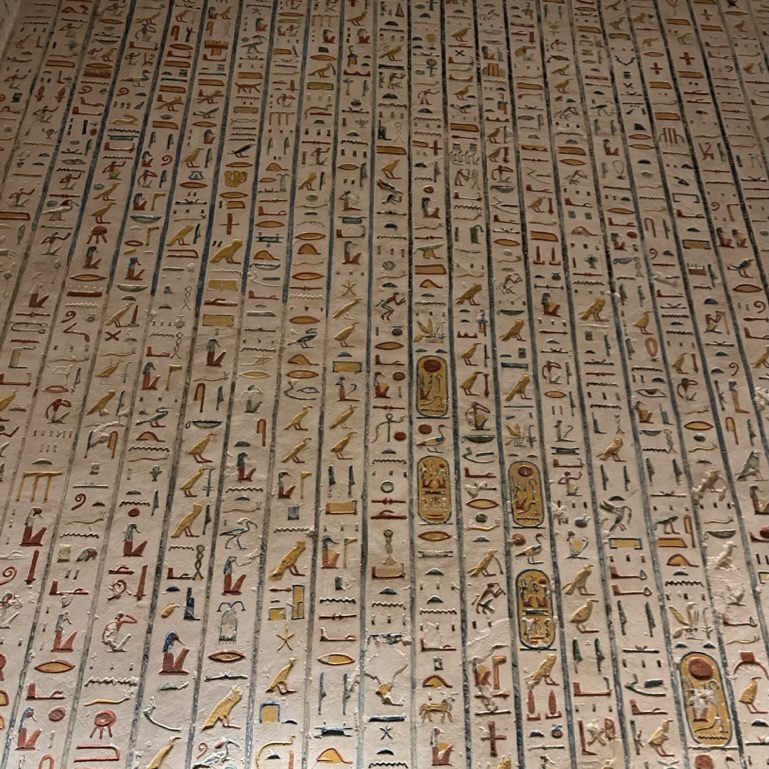
Next, we entered King Tut’s Tomb, the renowned boy king’s burial place, age 18 at death. His fame stems from having the only tomb found with all its treasures and offerings for the gods still intact. This was due to its clever construction beneath another tomb’s entrance, which fooled both thieves and archaeologists for many years. While his mummy remains in the tomb, the other artifacts are now housed in the National Egyptian Museum, previously visited on day 3. He was also renowned for his mind-blowing wealth—talk about living large at that age!
Afterwards, we went to the Queen Hatshepsut Temple. During her reign, women were not allowed to be queens, so she had to fabricate her lineage, claiming divine birth from one of the gods to assert her rule. Portraying herself as a male figure in statues and paintings was her way of projecting power. Unfortunately, her son, whose birthright she had usurped, later sought retaliation by attempting to erase her from history, destroying most of her artifacts and records.I personally couldn’t tell the difference between her statues and those of the male pharaohs, it was way too similar.
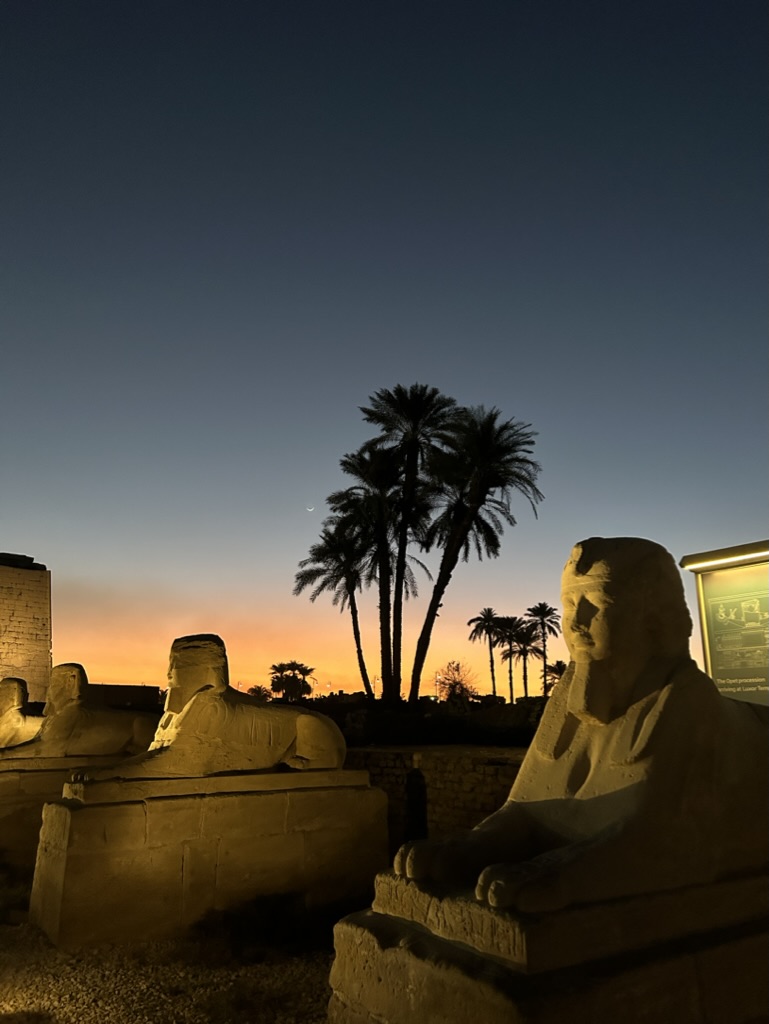
Later, with free time at the hotel, Sourabh, Sylvia, and I shared a bottle of wine, before visiting the Luxor Temple in the evening. We marveled at the avenue lined with miniature sphinxes used for ceremonial processions from temple to temple.
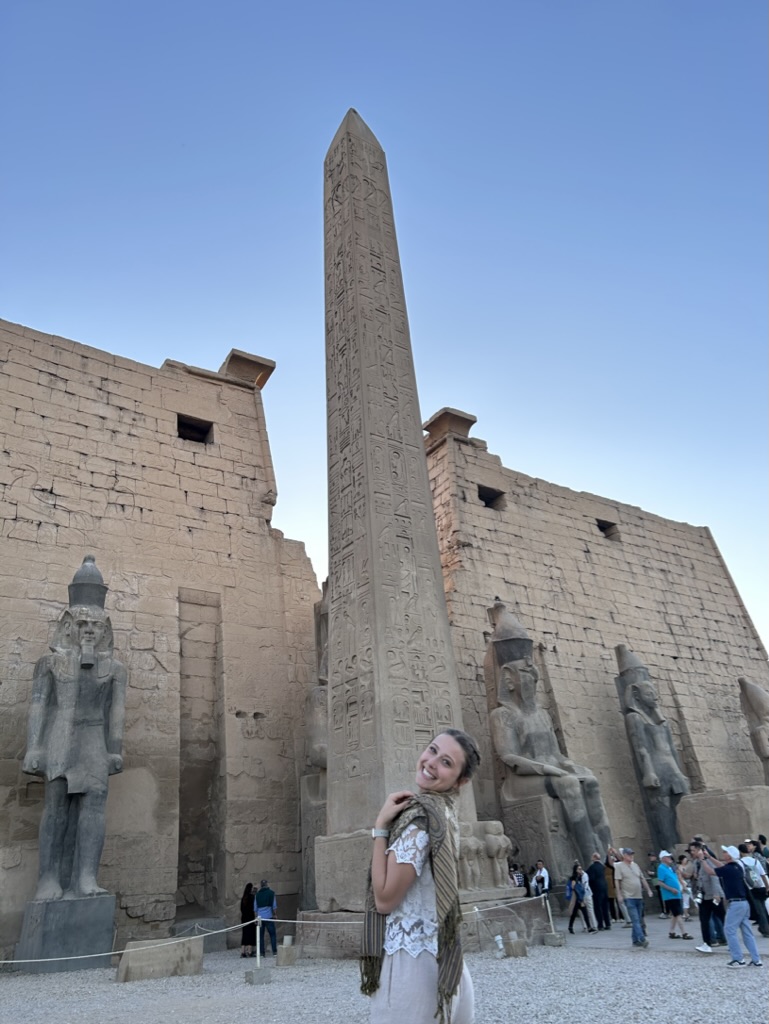
Day 7: Luxor, our final full day
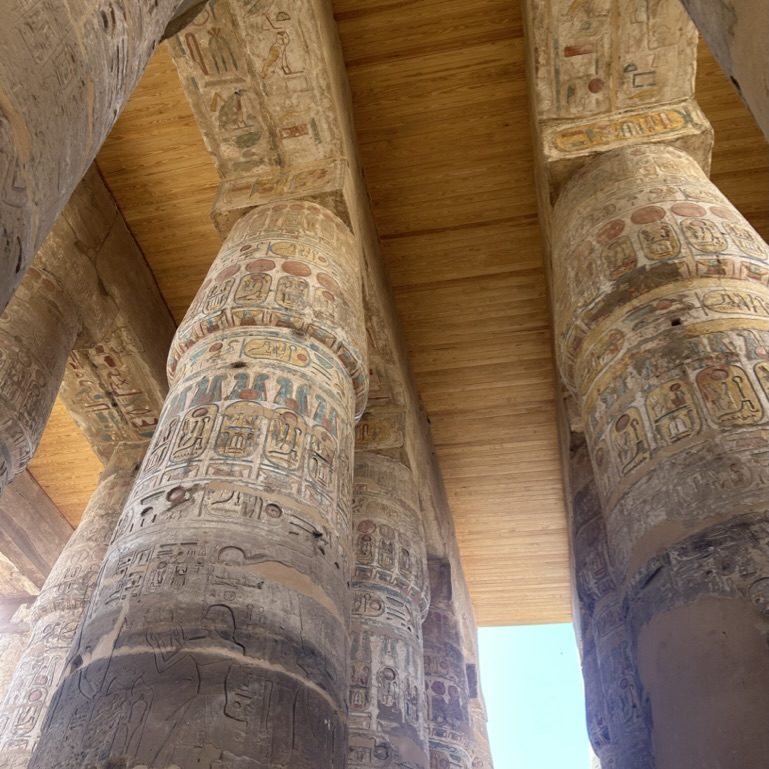
Today, we visited the Karnak Temple, dedicated to the worship of three gods. The temple was enormous, with vibrant colors still visible at the tops of the pillars where it was more sheltered. Interestingly, the sphinx avenue from yesterday leads directly to this temple. The site was quite crowded, and feeling a bit ‘templed out,’ we quickly moved on to our next activity.
We then visited Funtasia, a program that helps children in less fortunate villages learn about growing food, life skills, and different cultures through art. We went on a bike ride and explored a local village, gaining a deeper understanding of the community.
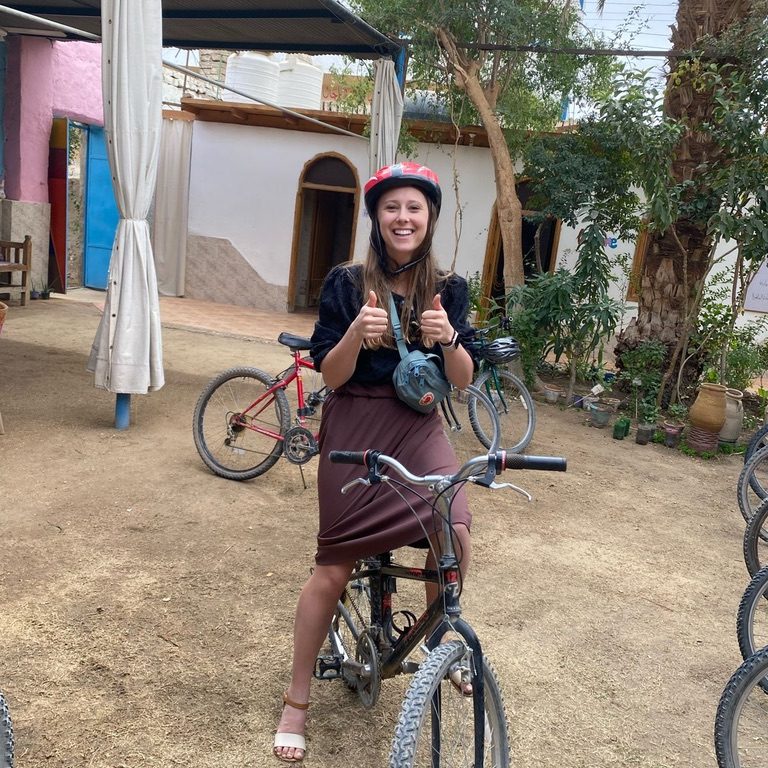
For our final evening, we took a leisurely stroll along the Nile, stopping at the Winter Palace, a luxurious hotel in Luxor, where we enjoyed a peaceful walk through its beautiful gardens. I felt a sense of relief as our journey was coming to an end, I would say a week was more than enough. Luxor had been good, especially with only really visiting tourist attractions with not many locals. The overall comfort level was better, making the end of the trip more enjoyable.
Day 8: Return to Cairo
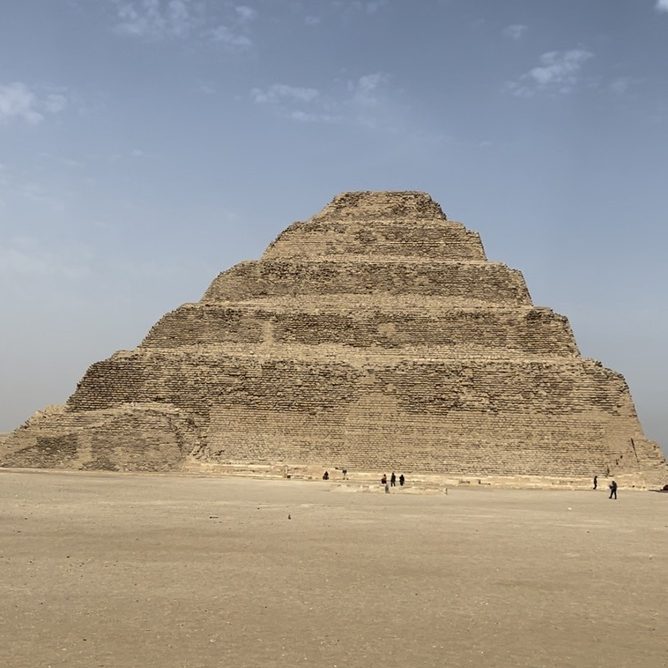
At 5 am, we headed to Luxor airport for a quick flight to Cairo. Upon arrival, we drove to Saqqara to see the Step Pyramid of Djoser, the first pyramid ever built. Unlike the iconic pyramids of Giza, this pyramid is less famous because its shape isn’t the perfect triangle they aimed for, like this picture depicts. In the distance, we could see other pyramids with varying shapes, including another with one with a curved side.
Our next and final destination as a group was Memphis, the first capital of Egypt. We admired the giant statue of King Ramesses II, but there wasn’t much more to see. We didn’t think we should miss Memphis with its great historical significance, but by this point in our journey, fatigue was setting in and we were definitely ready to head home.
Concluding the Journey
Despite getting incredibly sick at the end of the trip, likely catching what Sharon had, the experience was amazing. Especially the food!
G Adventures was an excellent company to choose, and I highly recommend it to anyone considering a similar adventure. Their website is easy to navigate, offering clear details and daily itineraries. You can even connect with other group members before the trip begins to get acquainted. However, be prepared for the total cost to exceed the initial quote with the add on activities.
Reflecting on the trip, I couldn’t have asked for a better group to travel through Egypt with. Everyone was kind and funny, which made the whole journey enjoyable.
Although there were uncomfortable moments with some locals, as I mentioned before, the overall experience was incredibly enriching. However, I would not recommend traveling alone as a female—not just for safety reasons, but also for comfort. Feeling watched and hearing inappropriate comments can significantly detract from your enjoyment. Comfort is a big part of enjoying your travels, and feeling uneasy can really spoil the experience.
I learned so much, not just about Egypt, but also about myself. It may sound cliché, but traveling really does help you understand your comfort zones and learn more about who you are as a person. It gave me a deeper appreciation for the givens we have at home, like clean water and the rights we enjoy as women. And who doesn’t love a decent public toilet?
What a trip it was! Thank you, Egypt, for the unforgettable memories!

 Around the World with Abigail
Leave a Reply!